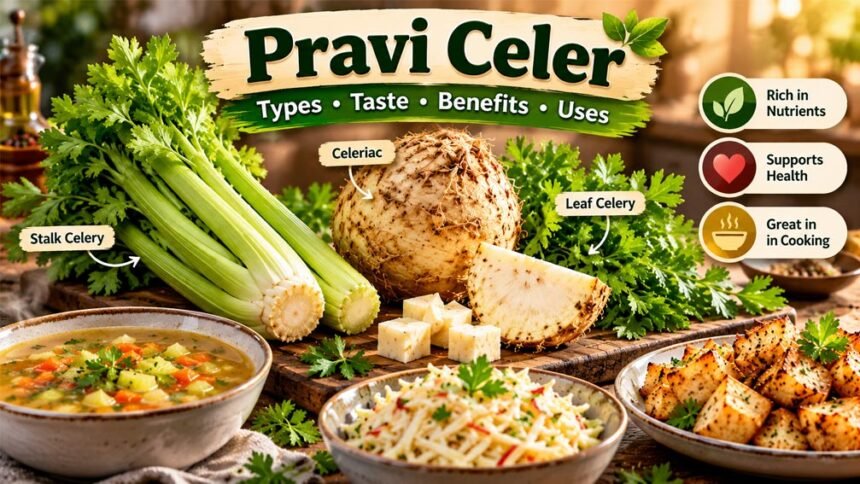
Pravi Celer is a name used for celery, known by the scientific name Apium graveolens. The name can be confusing. In some Balkan recipes, it means celery in general. In others, it may mean celeriac, also called celery root.
Knowing the difference can help you choose the right type. This guide explains what Pravi Celer is, its types, taste, uses, nutrition, benefits, and how to use it in cooking.
What Is Pravi Celer?
Pravi Celer is a Croatian common name for Apium graveolens, the plant we know as celery.
The word celer means celery. The word pravi can mean real, true, or genuine. So, Pravi Celer can roughly mean “real celery” or “true celery.”
It is not a completely different vegetable. Celery belongs to the Apiaceae plant family. Carrots, parsley, and parsnips are also part of this family.
There are different types of celery. Some are grown for their long stalks. Others are grown for their leaves. Celeriac is grown for its large, round base.
This is why the name can be confusing. A Balkan recipe that says Pravi Celer may mean celery root, stalk celery, or leaves. The way the ingredient is used in the recipe can help you choose the right one.
Is Pravi Celer the Same as Celeriac?
Not always.
Celeriac, also known as celery root, is one type of Apium graveolens. It is grown mainly for its large, round base instead of long green stalks.
Celeriac and normal green celery come from the same celery species. However, they are grown for different parts.
Some Balkan recipes use Pravi Celer when they mean celeriac. This is why some websites translate Pravi Celer as “celery root.”
However, Pravi Celer can have a wider meaning. If a recipe asks you to peel and cut a large round vegetable, it probably means celeriac. If it asks for green stalks or leaves, it probably means another type of celery.
Main Types of Pravi Celer
There are several types of celery. They come from the same species but are grown for different parts.
Stalk celery has long green or pale stalks. It is crisp and juicy. People often eat it raw, add it to salads, or cook it in soups and other dishes.
Leaf celery is mainly grown for its leaves and thin stems. It usually has a stronger celery taste. The leaves can be added to soups, sauces, broths, and stews.
Celeriac has a large, round, rough base. The outside is usually brown, while the inside is pale and firm. It can be boiled, roasted, mashed, or grated into salads.
Celery seeds can also be dried and used as a spice. They have a strong taste, so only a small amount is usually needed.
Pravi Celer vs Regular Celery
Pravi Celer and regular celery are not always two different plants. It depends on what someone means by Pravi Celer.
If Pravi Celer means celeriac, there are some clear differences.
| Feature | Celeriac | Regular Celery |
|---|---|---|
| Main part eaten | Large swollen base | Green stalks |
| Shape | Round and rough | Long and thin |
| Texture | Firm and dense | Crisp and juicy |
| Taste | Earthy and celery-like | Fresh and herbal |
| Common uses | Soup, mash, roasting, salads | Salads, soup, stock, snacks |
| Can be eaten raw? | Yes, after peeling | Yes |
| Cooking time | Usually longer | Usually shorter |
Celeriac is firm and gives more body to a meal. Regular celery contains more water and gives food a fresh crunch.
Both have a celery-like taste, but they do not always work in the same way in a recipe.
What Does Pravi Celer Taste Like?
The taste depends on the type of celery.
Stalk celery has a fresh and herbal taste. It can also be a little bitter. The stalks are crisp and juicy, which makes them good for salads and snacks.
Celery leaves usually have a stronger taste. Dark leaves can have a strong smell and flavor, so you may only need a small amount in soup or another dish.
Celeriac has a more earthy taste. It still tastes like celery, but it is different from the green stalks. Cooking makes celeriac softer and usually gives it a milder taste.
Young inner celery stalks are often softer and milder. Older outer stalks can be harder, stronger in taste, and sometimes stringy.
Why Pravi Celer Is Used in Balkan Cooking
Celery has been used in Balkan cooking for many years. Different types can be used depending on the meal.
Celery root is often added to soups, broths, and stews. It can be cooked with carrots, onions, parsley root, beans, meat, and other vegetables. It is used in traditional cooking in countries such as Croatia, Serbia, and Bosnia and Herzegovina.
Celeriac works well in slow-cooked food. It adds an earthy celery taste and becomes soft during cooking. It can be eaten with the other vegetables or removed after it has added flavor to the broth.
Celery leaves and stalks are also useful. Leaves give food a stronger celery taste, while stalks usually have a lighter and fresher taste.
How to Use Pravi Celer in Cooking
There are many ways to use Pravi Celer. The best method depends on the type you have.
Soups and Broths
Celery is often used in soups and broths.
The stalks and leaves can be cooked with carrots, onions, meat, beans, parsley root, and other vegetables. They add extra taste and smell to the liquid.
Celeriac can also be added to soup. Peel it and cut it into pieces before cooking. It adds both flavor and texture.
Clean celery leaves and stalk ends can also be saved for homemade stock. Do not use pieces that are moldy, slimy, or spoiled.
Roasted Celeriac
Celeriac can be roasted like other root vegetables.
Wash it and remove the rough outside. Cut the inside into similar-sized pieces. Add a little oil and simple seasoning, then roast until soft.
Roasting can make celeriac taste milder and a little sweeter.
Raw Salads
Stalk celery can be sliced and added to salads. It can also be eaten as a simple snack.
Celeriac can also be eaten raw. Wash and peel it first, then grate it or cut it into thin strips.
Apple, carrot, yogurt, mustard, and lemon juice can work well with raw celeriac. Lemon juice can also help stop cut celeriac from turning brown too quickly.
Mashed or Puréed
Celeriac can be boiled or steamed until soft and then mashed.
You can mash it alone or mix it with potato. It can also be blended into soup to make the soup thicker and smoother.
Using the Leaves
Celery leaves are edible, so you do not need to throw them away.
You can chop them and add them to soup, stock, tomato sauce, stew, rice, and other meals.
The leaves can have a strong taste. Start with a small amount and add more if needed.
Can You Eat Pravi Celer Raw?
Yes. Different types of Pravi Celer can be eaten raw.
Stalk celery can be washed and eaten as it is. You can also slice it for salads or serve it with a dip.
Celeriac can also be eaten raw, but you should remove its thick skin first. The pale inside can then be grated or cut into thin pieces.
Raw celeriac is firm and has a stronger earthy taste than cooked celeriac. Apple, carrot, yogurt, mustard, vinegar, or lemon juice can make a simple salad with it.
Celery leaves can also be eaten raw. Tender leaves can be chopped and added to salads.
Pravi Celer Nutrition
The nutrition depends on which type of celery you eat.
Stalk celery contains a lot of water. It also provides fiber and nutrients such as vitamin K, folate, and potassium.
Celeriac is more solid and contains less water than stalk celery. It also contains more carbohydrates by weight.
Here are approximate values for 100 grams of raw celeriac:
| Nutrient | Approximate Amount |
|---|---|
| Calories | 42 kcal |
| Carbohydrates | 9.2 g |
| Fiber | 1.8 g |
| Protein | 1.5 g |
| Fat | 0.3 g |
| Potassium | 300 mg |
| Vitamin C | 8 mg |
| Vitamin K | 41 µg |
These numbers are only a guide. The exact amount can change depending on the vegetable and how it is prepared.
Health Benefits of Pravi Celer
Pravi Celer can be part of a healthy and balanced diet.
Its fiber helps support normal digestion. Potassium helps the muscles and nerves work normally. Vitamin K has a role in blood clotting and bone health. Vitamin C also supports normal body functions.
However, celery is food, not medicine.
There is not enough good evidence to say that celery or celery juice can cure diseases or “detox” the body. Celery juice should not replace medicine or medical treatment.
The main benefit is simple. Celery provides useful nutrients while adding flavor and texture to meals.
Celery Allergy and Safety
Some people are allergic to celery. The reaction can sometimes be serious.
Celeriac comes from the same celery species. A person with a celery allergy should not think celeriac is safe just because it looks different.
Celery is also an allergen that must be shown on food labels under European Union rules.
People with a celery allergy should check soups, stocks, sauces, seasonings, and prepared foods. Celery may be used even when you cannot easily see it.
People with a known celery allergy should follow advice from a medical professional.
How to Choose Fresh Pravi Celer
For stalk celery, choose stalks that feel firm and fresh. The leaves should not look badly wilted or yellow.
Avoid celery that is slimy, moldy, badly damaged, or has a bad smell.
Celeriac naturally has rough and uneven skin, so this does not mean it is bad. Choose one that feels firm and heavy for its size.
Avoid celeriac with mold, large soft areas, rotten parts, or a bad smell. Medium-sized roots are often easier to peel and cut.
How to Clean and Prepare Celeriac
Celeriac can have soil around its rough skin. Wash it well before you start cutting it.
Cut off the top and bottom. This gives you a flat surface and makes the vegetable easier to cut safely.
Use a sharp knife to remove the thick brown outside. A normal vegetable peeler may not work well because the surface is rough.
After peeling, cut the pale inside into cubes, slices, wedges, or thin strips.
Cut celeriac can slowly turn brown when it is exposed to air. Putting it in cold water with a little lemon juice can help slow this down.
How to Store Pravi Celer
Keep stalk celery in the refrigerator. Try to stop it from drying out, but do not leave it sitting in too much water.
Whole celeriac usually lasts longer than fresh celery leaves or separated stalks. Keep it in the refrigerator.
After cutting or peeling celeriac, cover it and keep it cold.
Do not use celery that has mold, slime, a strong bad smell, or clear signs that it has gone bad.
Celery can also be frozen. However, stalk celery becomes softer after freezing. Frozen celery is better for soups, stews, sauces, and stocks than fresh salads.
How to Grow Pravi Celer at Home
Celery can be grown at home. It needs good soil, regular water, and enough time to grow.
Celery seeds are very small and can take time to start growing. Many gardeners begin them in trays before moving the young plants outside.
The seeds should stay close to the soil surface. Do not plant them too deeply.
Keep the soil moist but not full of water. Long dry periods can make celery stalks thinner or more bitter.
Celeriac needs a long growing season because its large base takes time to form.
The best time to plant celery depends on the local weather and the type you are growing. It is best to follow growing advice for your area.
Pravi Celer Substitutes
The best substitute depends on what the recipe needs.
If you need green celery stalks, normal supermarket celery is the easiest choice.
If you need strong celery leaves, use celery that has plenty of leaves. Celery leaves with a little parsley may also work.
If you need celeriac, you may be able to use parsley root, parsnip, or turnip. These vegetables can give a similar firm texture, but they do not taste exactly the same.
For soups and stews, you can also use a root vegetable with a small amount of normal celery. The root gives the dish texture, while the celery adds its familiar smell and taste.
Common Mistakes When Using Pravi Celer
A common mistake is thinking Pravi Celer always means celery root. It can have a wider meaning, so check the recipe before buying anything.
Another mistake is using normal stalk celery when the recipe needs celeriac, or using celeriac when the recipe needs crisp green stalks.
The rough skin of celeriac should usually be removed. It is also helpful to cut the pieces into similar sizes so they cook evenly.
Do not add too much strong celery to a mild soup. Start with a smaller amount and add more if needed.
Do not throw away healthy celery leaves. They can add flavor to soups, sauces, stews, and stocks.
You should also throw away celery that is moldy, slimy, or clearly spoiled.
Finally, do not treat celery or celery juice as a cure for health problems. It is a food, not a medicine.
How to Know Which Pravi Celer a Recipe Means
Look at the instructions in the recipe.
If it asks for long green stalks, it probably means stalk celery.
If it asks for green leaves, it probably means leaf celery or normal celery with plenty of leaves.
If it tells you to peel, grate, cube, roast, or mash a large round vegetable, it probably means celeriac.
Recipe photos can also help. Celeriac is round and rough, while stalk celery has long green or pale stalks.
This can be useful when reading Croatian, Serbian, Bosnian, or old family recipes where the type of celery is not clearly explained.
The safest choice is to look at how the ingredient is prepared instead of assuming Pravi Celer always means one type of celery.
Bottom Line
Pravi Celer is a regional name connected with Apium graveolens, the celery species. The name can roughly mean “true celery” or “real celery.”
It does not always mean celeriac. Depending on the recipe, it may mean stalk celery, leaf celery, or celeriac.
Stalks add crunch, leaves add a stronger celery taste, and celeriac works well in soups, stews, salads, roasted dishes, and mash.
If a recipe only says Pravi Celer, check how the ingredient is prepared. This is usually the easiest way to understand which type you need.
Frequently Asked Questions
What is Pravi Celer in English?
Pravi Celer means “true celery” or “real celery.” It is a name used for celery.
Is Pravi Celer the same as celery root?
Not always. Celery root, or celeriac, is one type of celery.
Is Pravi Celer the same as regular celery?
They come from the same celery plant species, but they are grown for different parts.
Can you eat Pravi Celer raw?
Yes. Celery stalks and peeled celeriac can both be eaten raw.
How do you cook Pravi Celer?
You can use it in soups and stews. Celeriac can also be boiled, roasted, steamed, or mashed.
What can I use instead of Pravi Celer?
You can use normal celery, parsnip, parsley root, or turnip, depending on the recipe.
Is Pravi Celer healthy?
Yes. It contains fiber, vitamins, and minerals and can be part of a healthy diet.
Can people with a celery allergy eat celeriac?
Celeriac is a type of celery. People with a celery allergy should avoid it unless their doctor says it is safe.
More To Explore: