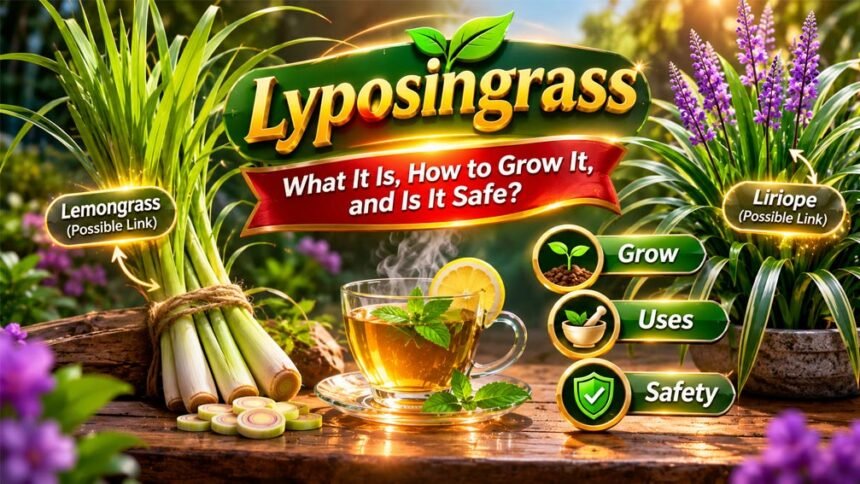
Lyposingrass is a plant name that appears on some gardening and herbal websites. Some sources describe it as a plant similar to lemongrass. Others connect it with Liriope, a plant mainly grown in gardens.
The main issue is that Lyposingrass is not a confirmed scientific plant name. This article explains what it may be, how to identify it, its possible uses, how to grow it, and whether it is safe.
What Is Lyposingrass?
Lyposingrass is a name used online for a grass-like plant. Some websites describe it as having long green leaves and a fresh lemon-like smell. It may also be linked with cooking, tea, gardening, and home use.
However, Lyposingrass is not clearly known as the scientific name of one plant. It may be a local name, selling name, spelling variation, or a term that has become common online.
This is important because many plants can look similar. Two plants may have long green leaves but still be completely different.
The best way to know what you have is to check the scientific name on the plant or product label.
Is Lyposingrass a Real Plant?
Real plants may be sold or discussed under the Lyposingrass name. However, there is no clear evidence that Lyposingrass is one officially recognized plant species.
Plants are normally identified by scientific names. For example, Cymbopogon citratus is a recognized type of lemongrass. Liriope muscari is a recognized ornamental plant also called lilyturf.
Lyposingrass does not have the same clear scientific identity based on the information available.
This does not mean a plant sold as Lyposingrass is fake. A seller may simply be using a less common name for a real plant. You should check which species it actually is.
Is Lyposingrass the Same as Lemongrass?
Some descriptions of Lyposingrass sound very similar to lemongrass. They mention long green leaves, a lemon-like smell, warm growing conditions, cooking, and herbal tea.
Lemongrass belongs to the Cymbopogon group. Some species are widely used in food and drinks because they have a fresh citrus taste and smell.
This may explain why some websites connect Lyposingrass with lemongrass. However, similar features do not prove they are the same plant.
If you want to use Lyposingrass for food or tea, check its full scientific name first. Do not rely only on its smell or appearance.
Is Lyposingrass the Same as Liriope?
Some gardening sources connect Lyposingrass with Liriope. One commonly mentioned species is Liriope muscari, also known as lilyturf or monkey grass.
Liriope has long, narrow leaves that look like grass. However, it is not a true grass. It belongs to the Asparagaceae plant family and is mainly grown for decoration.
Liriope usually grows in thick clumps. It can produce small flowers on upright spikes. The flowers may be purple, violet, lavender, or white. Some plants can also produce small dark fruits after flowering.
Gardeners often plant Liriope along paths, around borders, under trees, or as ground cover.
Liriope and lemongrass are different plants. Lemongrass is well known for its citrus smell and food uses, while Liriope is mainly used in gardens.
How to Identify Lyposingrass
Start by checking the plant label. Look for its full scientific name.
If you see Cymbopogon, it may be a type of lemongrass. If the label says Liriope muscari or another Liriope species, it is Liriope.
You can also look at the leaves, flowers, roots, and how the plant grows. Check whether it stays in one thick clump or spreads into nearby areas.
Smell can also give you a clue. Lemongrass usually gives off a strong citrus smell when suitable parts are crushed. However, smell alone should not be used to identify a plant.
Liriope can produce clear flower spikes, which can make it easier to recognize.
If you are still unsure, ask the seller, a trusted nursery, or a plant expert. This is especially important before eating the plant or making tea from it.
What Does Lyposingrass Look Like?
There is no single confirmed appearance for Lyposingrass because the name may be used for different plants.
If it refers to lemongrass, the plant may have long, thin, blade-like green leaves. They grow from a thick base and may stand upright or bend outward. The plant usually has a clear citrus smell when suitable parts are crushed.
If it refers to Liriope, the leaves are also long and narrow. However, Liriope often grows in neat clumps and produces flower spikes. Its flowers can be purple, violet, lavender, or white.
Some Liriope plants also produce small dark fruits after flowering.
Because these plants can look similar from a distance, leaves alone are not enough for identification. Check the flowers, smell, growth pattern, and scientific name.
What Is Lyposingrass Used For?
The uses of Lyposingrass depend on the actual plant.
If it is confirmed as an edible lemongrass species, it may be used in cooking and drinks. Lemongrass is commonly added to soups, curries, rice dishes, sauces, marinades, and herbal tea.
If the plant is confirmed as Liriope, it is mainly used for gardening. It can be planted along paths, around borders, under trees, in pots, or as ground cover.
These uses should not be mixed. A plant used for decoration should not automatically be treated as edible just because it looks similar to lemongrass.
Can You Eat Lyposingrass or Make Tea With It?
Do not eat Lyposingrass until you know exactly what plant it is.
If it is confirmed as an edible lemongrass species, it may be suitable for cooking and herbal tea. Lemongrass can add a fresh citrus flavor to soups, curries, sauces, rice, and other dishes.
Suitable leaves or stalks can also be used to make tea.
However, this does not mean every plant called Lyposingrass is safe to eat. A plant sold only for decoration should not be used in food or drinks unless you know it is edible.
Possible Health Benefits of Lyposingrass
Some websites connect Lyposingrass with antioxidant, antimicrobial, and anti-inflammatory effects.
These claims should be treated carefully. Most of the related information appears to come from studies of lemongrass, not from a confirmed plant species called Lyposingrass.
Lemongrass contains natural plant compounds that have been studied for different effects. However, research on lemongrass does not prove that every product called Lyposingrass provides the same benefits.
Lab research also does not always prove that something will have the same effect in people.
Claims about weight loss, detox, immunity, or treating diseases should not be accepted without good evidence.
If the plant is confirmed as edible lemongrass, it can be enjoyed as food or tea. It should not replace medicine or medical care.
Is Lyposingrass Safe?
There is no simple answer because the exact identity of Lyposingrass is unclear.
Safety depends on the plant, how much is used, and how it is used. Eating a plant, drinking it as tea, putting it on the skin, and using a strong extract are all different.
Some herbs may cause stomach problems, skin irritation, itching, redness, or allergic reactions. Some grass-like leaves can also have sharp edges that may cut the skin.
Strong oils and extracts may carry more risk because they contain higher amounts of plant compounds.
Children, pregnant or breastfeeding people, and people taking regular medicines should be extra careful with unknown herbal products.
If you cannot confirm what plant a Lyposingrass product contains, it is safer not to eat it or use it as a herbal treatment.
How to Grow Lyposingrass
Growing Lyposingrass depends on what plant you actually have.
If it is lemongrass, it normally prefers warm weather and plenty of sunlight. It likes regular water but needs soil that drains well. Frost and very cold weather can damage it.
If the plant is Liriope muscari, it may grow well in partial shade. Some varieties can also handle more sun. Good drainage is still important because soil that stays too wet can harm the roots.
Spring and early autumn can be good planting times for Liriope. If you are planting several plants, around 30 to 45 cm of space may work for many varieties. The right spacing depends on the type and how large it becomes.
Growing Lyposingrass in Pots and Indoors
Growing the plant in a pot can be useful if you have little garden space or need to protect it from cold weather.
Choose a pot with drainage holes. It should also be large enough to give the roots room to grow.
If you have confirmed lemongrass, place the pot near a bright window when growing it indoors. The plant normally needs plenty of light.
Good airflow also helps. Avoid keeping the pot in a dark or crowded place where the soil stays wet.
Check the soil regularly. Plants in pots may dry faster during warm weather. In cooler months, growth may slow and less water may be needed.
Water, Soil, Sunlight, and Temperature
There is no single care plan for every plant called Lyposingrass.
Lemongrass normally likes well-drained soil, regular moisture, sunlight, and warm temperatures. Do not leave its roots sitting in wet soil.
Liriope can handle a wider range of light. Many varieties grow well in partial shade. Some can also grow in full sun if they receive enough water.
Very strong sunlight and dry soil can cause brown leaves or leaf tips in some Liriope plants.
New plants normally need regular water while their roots grow. Older plants may handle short dry periods better.
Temperature needs also depend on the plant. Lemongrass may be damaged by frost, while some Liriope varieties can handle cooler weather.
Pruning and General Care
Remove dead, brown, or damaged leaves when needed. This helps keep the plant clean and makes new growth easier to see.
Use clean scissors or garden shears. Gloves can also be useful because some grass-like leaves have rough or sharp edges.
For lemongrass, older usable stalks can be harvested while younger shoots are left to grow.
For Liriope, old leaves can often be trimmed in late winter or early spring before new growth becomes strong. Be careful not to cut fresh shoots.
Liriope normally does not need heavy feeding. Compost or a suitable fertilizer may help in some soils, but using too much fertilizer is not necessary.
How to Propagate Lyposingrass
Many clump-forming plants can be grown through division.
This means separating a mature plant into smaller sections. Each section should have healthy roots and shoots.
Lemongrass clumps can often be divided and replanted. Keep the new plants properly watered while their roots settle into the soil.
Liriope can also be divided. Spring is often a useful time to divide established Liriope plants.
Newly divided plants need moisture, but the soil should still drain well. Too much water can damage the roots.
Common Growing Problems
The correct solution depends on which plant you have. Identify it first before treating a growing problem.
Yellow Leaves
Yellow leaves may be caused by too much water, poor drainage, low light, nutrient problems, or natural aging.
Check the soil first. If it stays wet for too long, reduce watering and improve drainage.
Do not add fertilizer immediately. Fertilizer will not fix roots damaged by too much water.
Brown Leaf Tips
Brown leaf tips can appear when the plant is too dry or exposed to too much heat and strong sunlight.
Check the soil and sunlight. You can remove badly damaged leaves, but fixing the main cause is more important.
Poor Growth or Few Flowers
Poor growth may be caused by unsuitable light, water, soil, temperature, or root problems.
Liriope growing in very deep shade may have healthy leaves but fewer flowers.
Check the growing conditions before adding fertilizer or moving the plant.
Slugs and Snails
Slugs and snails may eat Liriope leaves, especially in wet and shady garden areas.
Check around the plant and remove extra garden waste where these pests can hide. Avoid keeping the area wetter than needed.
If the problem continues, use a pest-control method that is suitable for your garden.
Root Problems
Roots can become damaged when soil stays wet for too long.
Good drainage helps air reach the roots. Avoid watering when the soil is already very wet.
If water often collects around the plant, improve the drainage.
Lyposingrass in Landscaping
If Lyposingrass is confirmed as Liriope, it can be used in many parts of a garden.
Liriope is often planted along paths and borders. Its clumping growth can create a clean edge between a lawn, path, and flower bed.
It can also grow under trees and shrubs where there is partial shade. Groups of Liriope may be used as ground cover, while smaller groups can grow in pots.
Some varieties have green leaves with lighter markings. Flowers may be purple, violet, lavender, or white.
Lemongrass gives a garden a different look. Its taller leaves can add a tropical feel. If you grow an edible species, it can also be harvested for cooking.
Before planting, check the mature size, sunlight needs, climate, and growth pattern of the plant.
Lyposingrass vs Lemongrass vs Liriope
Lyposingrass, lemongrass, and Liriope should not automatically be treated as the same plant.
| Feature | Lyposingrass | Lemongrass | Liriope |
|---|---|---|---|
| Botanical identity | Unclear | Cymbopogon group | Liriope group |
| Plant type | Depends on species | Aromatic grass | Ornamental perennial |
| Leaves | Usually described as long and narrow | Long, blade-like leaves | Narrow, arching leaves |
| Smell | Sometimes described as citrus-like | Strong citrus smell | Not known for the same citrus smell |
| Main use | Depends on identity | Food, drinks, fragrance, gardens | Landscaping |
| Food use | Not confirmed | Some species are edible | Mainly ornamental |
| Tea use | Must be confirmed first | Common with suitable species | Not used like lemongrass tea |
| Garden use | Depends on species | Herb and ornamental gardens | Borders, ground cover, pots |
| Light | Depends on species | Plenty of sunlight | Sun or partial shade, depending on variety |
The main difference is that lemongrass and Liriope are known plant groups. Lyposingrass is still an unclear name.
How to Buy Lyposingrass Safely
Do not buy a plant or herbal product based only on the Lyposingrass name.
Check the scientific name first. This can help you understand whether the product contains lemongrass, Liriope, or another plant.
When buying a living plant or seeds, check its mature size, sunlight needs, climate needs, and growth pattern.
For dried leaves, tea, powder, oils, or extracts, check the full ingredient list. Also look for the maker’s details, warnings, directions, storage information, and expiry date.
Words such as “natural,” “traditional,” or “herbal” do not automatically mean a product is safe.
If the seller cannot clearly tell you what plant is being sold, do not use it for food, tea, or health purposes.
Bottom Line
Lyposingrass is an unclear plant-related name. Some online sources connect it with lemongrass, while others connect it with Liriope.
These are different plants. Lemongrass belongs to the Cymbopogon group and some species are widely used in cooking and drinks. Liriope is mainly grown for landscaping and decoration.
The safest step is to check the scientific name first. Once you know the exact plant, you can follow the right advice for growing, cooking, care, and safety.
Frequently Asked Questions
What is Lyposingrass?
Lyposingrass is an unclear plant name found online. It is sometimes linked with lemongrass or Liriope.
Is Lyposingrass a real plant?
The name may be used for real plants, but it is not a confirmed scientific plant name.
Is Lyposingrass the same as lemongrass?
It is not confirmed. Always check the scientific name before treating Lyposingrass as lemongrass.
Is Lyposingrass the same as Liriope?
Some sources link Lyposingrass with Liriope. Check the plant label to know what it really is.
Can you eat Lyposingrass?
Only eat it if the exact plant is confirmed as safe and edible. Do not eat an unknown plant.
Can you make Lyposingrass tea?
Only make tea if the plant is confirmed as an edible species. Do not use an unknown plant for tea.
How do you grow Lyposingrass?
It depends on the actual plant. Lemongrass likes sun and warmth, while Liriope can grow well in partial shade.
Is Lyposingrass safe?
Safety depends on the actual plant. Identify it before eating it or using it as a herbal product.
More To Explore: