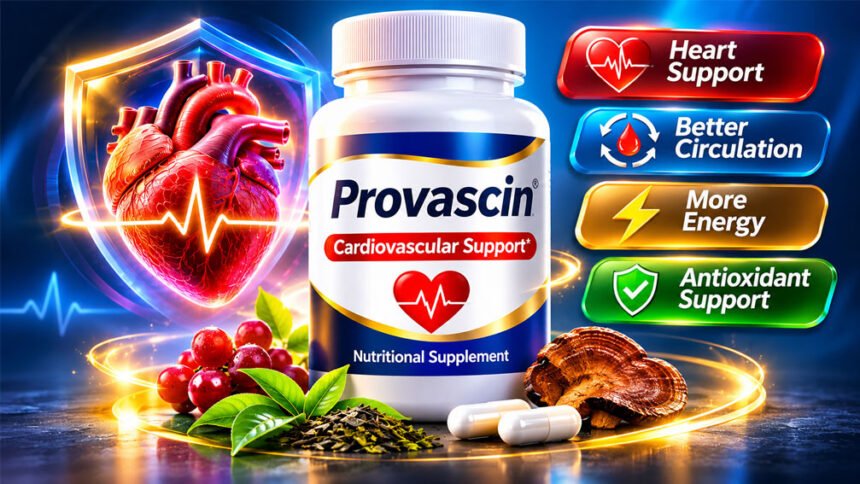
Provascin is a nutritional supplement linked with heart and blood circulation support. The best-known version is PURICA Provascin, which contained several nutrients and plant-based ingredients.
People search for Provascin to learn about its uses, ingredients, benefits, side effects, and safety. Some people also want to know if it can help with blood pressure or circulation.
This article explains what Provascin is, how it works, what it contains, and its possible risks. It also explains which claims have evidence and which are still unclear.
What Is Provascin?
Provascin is best known as a nutritional supplement historically linked with PURICA, a Canadian wellness brand. Its documented formula contained several nutrients, antioxidants, and plant-based ingredients.
It was mainly promoted to support heart health and blood circulation. Some of its ingredients are also linked with energy production, metabolism, and antioxidant activity.
Provascin is not the same as prescription heart medicine. There is not enough strong evidence to say that it treats high blood pressure, heart disease, high cholesterol, diabetes, or other cardiovascular conditions.
There is also some unclear information about Provascin online. Some websites do not clearly identify its maker or ingredients. For this reason, people should always check the label of the exact product they are considering.
Provascin History and Background
The Provascin name has been used for many years. Historical trademark information connects PROVASCIN with The Nutraceutical Medicine Company Inc. Trademark activity goes back to the early 2000s.
Later product information linked Provascin with the PURICA brand.
Older retailer listings show that Provascin was sold as a nutritional supplement in capsule form. A 120-capsule package is well documented.
However, old listings do not prove that the product is still being made today. Online product pages can remain available even after a product becomes difficult to find.
The formula may also have changed over time. Anyone buying Provascin today should check the maker, ingredients, serving instructions, expiry date, and packaging.
What Is Provascin Used For?
Provascin was mainly sold to support general heart and circulation health. Its ingredients were also linked with cellular energy, metabolism, and antioxidant support.
This is why people may search for Provascin when looking for information about blood circulation, blood pressure, cholesterol, or heart health.
However, supporting normal body functions is different from treating a medical condition.
There is not enough evidence to say that Provascin treats high blood pressure, high cholesterol, diabetes, blocked arteries, heart disease, or circulation disorders. It should not replace medicine prescribed by a doctor.
What Ingredients Are in Provascin?
The historical PURICA Provascin formula included eight main ingredients:
- L-carnitine
- Alpha-ketoglutaric acid
- Chaga mushroom
- Coenzyme Q10
- Betaine hydrochloride
- Alpha-lipoic acid
- Grape-seed extract
- Green-tea extract
Older information also gives approximate amounts for these ingredients. However, these amounts may not apply to every product using the Provascin name today.
Always check the ingredient label on the actual bottle.
L-Carnitine
L-carnitine is naturally found in the body. It helps move fatty acids into parts of cells where they can be used to produce energy.
The historical Provascin formula reportedly contained about 188 mg per capsule.
L-carnitine has been studied for different health uses. However, studies about L-carnitine alone do not prove that the complete Provascin supplement provides the same benefits.
Alpha-Ketoglutaric Acid
Alpha-ketoglutaric acid is involved in normal energy and metabolism processes in the body.
The historical Provascin formula reportedly contained around 125 mg per capsule.
It helps explain the product’s focus on energy and metabolism. However, its presence does not make Provascin a treatment for heart disease.
Chaga Mushroom
Chaga is a fungus that commonly grows on birch trees in cold areas. It contains compounds that have been studied for antioxidant activity.
Historical Provascin information lists about 125 mg of Chaga per capsule.
Research on Chaga is still developing. There is not enough strong evidence to say that Chaga prevents or treats heart disease. It may also interact with some medicines.
Coenzyme Q10
Coenzyme Q10 is commonly called CoQ10. It is naturally found in the body and helps cells produce energy. It also has antioxidant functions.
Historical Provascin information lists about 38 mg of CoQ10 per capsule.
CoQ10 has been studied separately for several health conditions. However, this research does not automatically prove that Provascin provides the same results.
Betaine Hydrochloride
Betaine hydrochloride was another ingredient in the historical Provascin formula. It reportedly provided about 31 mg per capsule.
There is limited information showing a specific heart benefit from this amount in Provascin. It should not be used as proof that the supplement treats cardiovascular problems.
Alpha-Lipoic Acid
Alpha-lipoic acid is involved in metabolism and also works as an antioxidant.
The historical Provascin formula reportedly contained about 13 mg per capsule.
This ingredient has been studied for different health purposes. However, studies may use different amounts, so their results cannot automatically be applied to Provascin.
Grape-Seed Extract
Grape-seed extract contains natural plant compounds called polyphenols. These compounds have antioxidant properties.
The historical Provascin formula reportedly contained around 9 mg per capsule.
Grape-seed extract is sometimes linked with circulation and blood-vessel health. However, it has not been shown to make Provascin a treatment for blocked arteries or heart disease.
People taking blood-thinning medicines should be careful with concentrated plant extracts and speak with a healthcare professional.
Green-Tea Extract
Green-tea extract contains concentrated compounds found naturally in green tea. It is commonly included in supplements for antioxidant support.
The historical Provascin formula reportedly contained about 9 mg per capsule.
Some green-tea extracts contain caffeine, while others do not. People who are sensitive to caffeine may experience poor sleep, nervousness, stomach discomfort, or a faster heartbeat.
The label should be checked to understand what the exact product contains.
How Does Provascin Work?
Provascin does not work through one single ingredient. Its historical formula contained several ingredients that have different roles in the body.
L-carnitine, CoQ10, and alpha-ketoglutaric acid are linked with energy and metabolism. Chaga, alpha-lipoic acid, grape-seed extract, and green-tea extract are more closely linked with antioxidant activity.
Antioxidants help protect cells from oxidative stress. However, this does not mean an antioxidant supplement can prevent heart disease or repair damaged blood vessels.
The same applies to claims about circulation and blood pressure. Knowing how one ingredient works does not prove that the complete Provascin formula produces the same medical effect.
Potential Benefits of Provascin
The possible benefits of Provascin are mainly based on its ingredients and the way the product was historically marketed.
Some ingredients are involved in cellular energy and metabolism. Others provide compounds with antioxidant activity. This is why Provascin was promoted for general heart and circulation support.
However, these possible benefits should not be confused with proven medical results.
There is not enough strong evidence to say that Provascin prevents heart attacks, removes plaque from arteries, treats high blood pressure, lowers cholesterol, or cures heart disease.
It is better understood as a nutritional supplement rather than a medical treatment.
Does Provascin Help Blood Circulation?
Provascin has historically been linked with circulation support. This is one reason people may consider it when looking for ways to support blood flow.
Poor circulation, however, can have many causes. Problems may involve the arteries, veins, heart, diabetes, blood clots, or other health conditions.
There is not enough strong evidence to say that Provascin treats circulation disorders. Finding the actual cause of poor circulation is more important.
People with ongoing leg swelling, numbness, unusual skin changes, strong pain, or wounds that heal slowly should seek medical advice. Sudden or severe symptoms may require urgent care.
Does Provascin Lower Blood Pressure?
Provascin is sometimes linked with blood-pressure support. This may be because ingredients such as CoQ10 have been studied separately in cardiovascular research.
However, studies of CoQ10 or another single ingredient do not prove that Provascin itself lowers blood pressure.
There is not enough strong evidence to say that Provascin is a treatment for hypertension.
People taking blood-pressure medicine should not stop or replace their treatment with Provascin. Anyone who wants to use the supplement with existing medicine should first ask a doctor or pharmacist to check the ingredients.
Provascin for Cholesterol and Blood Sugar
Some ingredients in Provascin have been studied separately for metabolism, cholesterol, or blood sugar.
This does not mean Provascin treats high cholesterol or diabetes. The amounts used in research may also be very different from the amounts found in the supplement.
People taking medicine for diabetes or high cholesterol should continue following their treatment plan. They should also ask a healthcare professional before adding Provascin because some ingredients may interact with medicines.
Is There Evidence That Provascin Works?
Several ingredients in Provascin have been studied separately. These include CoQ10, L-carnitine, alpha-lipoic acid, and plant extracts.
However, research about one ingredient is not the same as research about the complete Provascin formula.
Studies can use different amounts, formulas, treatment periods, and groups of people. Because of these differences, their results cannot automatically be applied to Provascin.
There is not enough strong direct clinical evidence showing that the complete Provascin formula prevents or treats cardiovascular disease.
Personal reviews are also not strong medical evidence. Someone may feel better while using a supplement because of changes in diet, exercise, sleep, medicine, or their health condition.
Provascin is therefore better viewed as a nutritional supplement, not a proven cardiovascular treatment.
Provascin Dosage and How to Take It
There is no single Provascin dosage that should be followed from an old website or product review.
The formula and recommended serving may have changed. Users should follow the directions printed on their exact product.
Check the serving size, ingredients, warnings, directions, and expiry date before taking it.
Taking more than the recommended amount does not mean the supplement will work better or faster. A larger amount may increase the chance of side effects or medicine interactions.
If the dosage or label is unclear, ask a pharmacist or doctor instead of guessing.
Provascin Side Effects
Possible Provascin side effects may depend on the ingredients, amount taken, other medicines, and the person’s health.
Possible effects include nausea, stomach discomfort, loose stools, headache, dizziness, and sleep problems.
Green-tea extract may contain caffeine. People sensitive to caffeine may experience nervousness, trouble sleeping, stomach irritation, or a faster heartbeat.
Natural ingredients can also cause allergic reactions. Being natural does not always mean a product is safe for everyone.
Stop using the product and seek medical advice if you develop a serious or unusual reaction. Trouble breathing, swelling of the face or throat, fainting, chest pain, or serious heartbeat changes need quick medical attention.
The exact side effects may differ between Provascin formulas.
Provascin Drug Interactions and Precautions
Provascin contains several ingredients, so medicine interactions are possible.
People taking blood-pressure medicine, blood thinners, antiplatelet drugs, diabetes medicine, or other heart medicines should be especially careful.
People with heart disease, kidney or liver problems, diabetes, bleeding problems, or low blood pressure should also speak with a healthcare professional before using it.
Pregnant or breastfeeding people should seek medical advice before taking Provascin because there may not be enough safety information about every ingredient.
People preparing for surgery should tell their medical team about Provascin and any other supplements they take.
Taking the actual bottle to a doctor or pharmacist can be helpful. They can check the complete ingredient list and look for possible medicine interactions.
Is Provascin FDA Approved?
Provascin should not be described as an FDA-approved prescription medicine for heart disease.
In the United States, dietary supplements and prescription medicines are regulated differently. Supplements generally do not go through the same approval process used to show that a new prescription drug is effective.
This means that being available for sale does not prove Provascin treats high blood pressure, high cholesterol, diabetes, or heart disease.
However, this also does not automatically mean the supplement is unsafe. Safety depends on the ingredients, amount, manufacturing quality, and how the product is used.
Is Provascin Still Available?
Historical information shows that PURICA Provascin was sold in capsule form. A 120-capsule package is well documented.
Its current availability is not clearly confirmed.
Old product pages may remain online even when a supplement is no longer regularly made or sold. For this reason, an old listing does not prove that Provascin is currently in production.
If you find Provascin for sale, check the manufacturer, ingredients, expiry date, batch information, instructions, packaging, and safety seal.
This is especially important with older products. A supplement using the Provascin name today may not have the same formula as the historical PURICA product.
What to Check Before Buying Provascin
Before buying Provascin, make sure you know exactly what product you are getting.
Check the manufacturer, complete ingredient list, ingredient amounts, serving size, instructions, warnings, expiry date, and product information.
The package should be properly sealed and clearly labelled.
Be careful with sellers claiming that Provascin can cure heart disease, permanently lower high blood pressure, clear blocked arteries, or replace prescription medicine. Strong medical claims need strong evidence.
Price does not prove quality either. A more expensive supplement is not automatically safer or more effective.
Avoid products with missing labels, damaged packaging, unclear manufacturing details, or health claims that cannot be checked.
Who Should Speak With a Doctor Before Using Provascin?
Some people should be especially careful before taking Provascin.
This includes people with heart disease, high or low blood pressure, diabetes, circulation problems, kidney or liver conditions, or bleeding problems.
People taking blood thinners, blood-pressure medicine, diabetes medicine, heart medicine, or several prescription drugs should also seek professional advice.
Pregnant or breastfeeding people should speak with a healthcare professional before using it.
People preparing for surgery should tell their medical team about Provascin and other supplements they take.
Provascin should also never be used to delay medical care. Chest pain, severe breathing problems, fainting, sudden weakness, or other serious symptoms need medical attention.
Provascin and Healthy Heart Habits
Supplements cannot replace the everyday habits that help support heart health.
Regular physical activity can help with fitness and circulation. Eating vegetables, fruit, whole grains, beans, and suitable protein sources can provide important nutrients.
Limiting too much salt can also be helpful, especially for people managing high blood pressure.
Avoiding smoking, limiting heavy alcohol use, getting enough sleep, and managing stress are also important for long-term health.
Regular health checks can help find problems that do not cause clear symptoms. High blood pressure, for example, may be present even when a person feels normal.
Some people still need medicine even when they follow healthy habits. They should continue following the treatment recommended by their healthcare professional.
If Provascin is suitable for someone, it should only be one small part of a wider approach to health.
Bottom Line
Provascin is best known as a nutritional supplement historically linked with PURICA. Its documented formula contained L-carnitine, alpha-ketoglutaric acid, Chaga mushroom, CoQ10, betaine hydrochloride, alpha-lipoic acid, grape-seed extract, and green-tea extract.
These ingredients have different roles related to energy, metabolism, and antioxidant activity. Some have also been studied separately for different health uses.
However, this does not prove that the complete Provascin formula treats cardiovascular disease, high blood pressure, high cholesterol, diabetes, or circulation problems.
Its current availability is also unclear. Anyone who finds Provascin today should check the maker, ingredients, expiry date, instructions, and packaging.
People with existing health conditions or those taking prescription medicine should ask a doctor or pharmacist to check the product before using it.
Frequently Asked Questions
What is Provascin?
Provascin is a nutritional supplement linked with PURICA. It was mainly sold to support heart health, circulation, and energy.
What is Provascin used for?
Provascin was mainly used for general heart and blood circulation support. It was also linked with energy and antioxidant support.
What ingredients are in Provascin?
The older formula included L-carnitine, Chaga, CoQ10, alpha-lipoic acid, grape-seed extract, green-tea extract, and other ingredients.
Does Provascin lower blood pressure?
There is not enough strong evidence that Provascin lowers high blood pressure. It should not replace prescribed medicine.
Is Provascin good for cholesterol?
There is not enough evidence that Provascin lowers high cholesterol. It should not replace cholesterol medicine.
What are the side effects of Provascin?
Possible side effects may include nausea, stomach problems, headache, dizziness, or reactions to some ingredients.
Can you take Provascin with other medicines?
Some ingredients may interact with certain medicines. Ask a doctor or pharmacist before taking Provascin with regular medication.
Is Provascin still available?
Provascin was sold in the past, but its current availability is unclear. Check the product, maker, ingredients, and expiry date before buying.
More To Explore:
Trupeek Com Review: Content, Benefits, Limitations, and Safety