Messonde is an uncommon term that appears on technical pages, translated documents, product pages, and online articles. Its meaning can be confusing because it does not have one clear meaning in English.
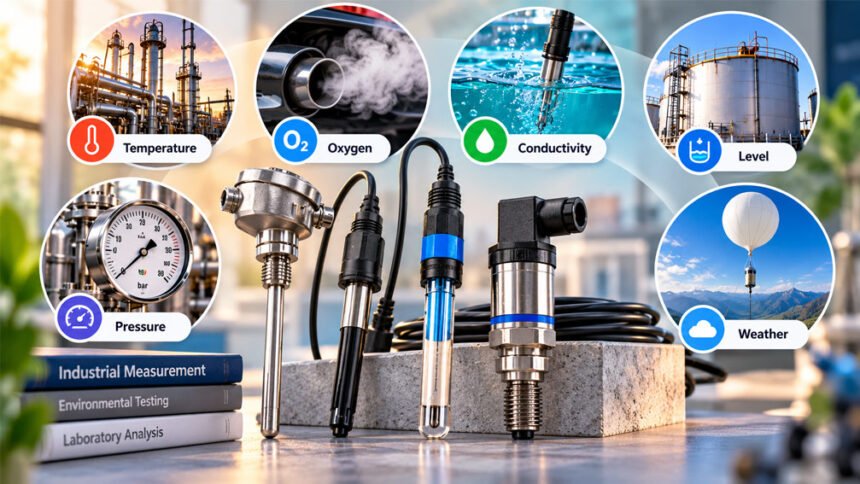
In technical content, Messonde is often linked to the German word Messsonde, which means a measuring probe. These probes can measure temperature, oxygen, pressure, conductivity, liquid level, and other conditions.
This guide explains what Messonde means, how measuring probes work, the main types, where they are used, and why accuracy matters.
What Is Messonde?
Messonde is a term that can have different meanings depending on where it is used. In technical content, it is often connected with a measuring probe or sensor.
A measuring probe detects a physical or chemical condition. It usually works as part of a larger measuring system.
For example, one probe may measure the temperature inside a tank. Another may check oxygen in exhaust gas. A different probe may measure the conductivity of water.
So, Messonde should not be treated as one specific device. Its exact meaning depends on what is being measured.
Messonde is also used outside technical content. It has appeared as a website or brand name and as a newer idea linked with exploration and personal growth. These meanings are different from the technical use of the word.
Messonde and Messsonde: What Is the Connection?
The technical meaning of Messonde becomes easier to understand when we look at the German word Messsonde.
Messsonde is a German term for a measuring probe. In English, it may be translated as measuring probe, measurement probe, test probe, sensor probe, or sometimes measuring sensor.
The word Sonde means probe. It appears in different scientific, medical, and technical terms.
Messonde may appear as a changed spelling in searches, translated pages, copied product descriptions, or technical records. Older German documents may also use Meßsonde.
Here is a simple comparison:
| Term | Meaning |
|---|---|
| Messonde | A term that may be linked with measuring probes, depending on context |
| Messsonde | German term for a measuring probe |
| Meßsonde | Older German spelling of Messsonde |
| Sonde | General word for a probe |
If you find Messonde in a technical document but cannot understand its meaning, try searching for Messsonde along with what is being measured.
For example, if the document talks about temperature, searching for a temperature Messsonde may give clearer results.
Is Messonde a Specific Technology or Product?
There is no clear evidence that Messonde is the official name of one specific technology or product family.
Several online articles describe Messonde as a measuring-probe or sensor technology. However, seeing the same description on several general websites does not prove that Messonde is an official industry term.
The information available does not point to one confirmed Messonde manufacturer, developer, product range, technical standard, or universal specification.
Measuring probes and sensors are real technologies and are widely used. However, this does not mean there is one special technology called Messonde that performs every type of measurement.
If you find a product using this name, check its manufacturer, model number, measurement range, technical details, and official documentation.
The name Messonde is also used online in other ways. For example, Messonde.com has used it as a publishing name and has described Messonde as an idea linked with curiosity, exploration, creativity, resilience, and personal growth.
This use should not be confused with the German technical word Messsonde.
How Does a Measuring Probe Work?
A measuring probe has a sensing element. This is the part that detects a change.
For example, a temperature probe reacts to heat. An oxygen probe detects oxygen levels. A conductivity probe checks the electrical properties of a liquid.
The probe then turns this change into a signal. Depending on the device, the signal may be electrical, optical, analog, or digital.
The signal goes to another device, such as a meter, controller, computer, or monitoring system.
That device turns the signal into useful information. A simple meter may show a number on a screen. An industrial system may record readings throughout the day.
Some systems can also react to the readings. For example, they may sound an alarm if a temperature becomes too high or change a machine setting when a reading goes outside a set range.
Main Parts of a Measuring Probe
The design of a measuring probe depends on its purpose. However, many probes have some similar parts.
The sensing element detects the condition being measured.
The probe may also have a protective body or housing. This helps protect the sensing element from heat, water, chemicals, dust, pressure, vibration, and physical damage.
Some probes also use electrodes, membranes, coatings, or optical parts. These depend on the type of measurement.
Cables and connectors carry the signal to other equipment. Some probes also have small electronic parts that help process the signal.
A probe may connect to a meter, computer, controller, or monitoring system. This equipment can display, save, or use the readings.
There is no single probe design for every job. The probe must match both the measurement and the place where it will be used.
Common Types of Messonde Measuring Probes
Measuring probes come in many types. Each type is made for a different job.
Temperature Probes
Temperature probes measure heat.
They are commonly used in food, laboratories, ovens, tanks, pipes, heating systems, machines, and factories.
Some probes work at normal temperatures. Others are made for very hot industrial environments.
The probe must also be placed correctly. Poor contact or bad placement can affect the reading.
Response time is important too. Some jobs need a probe that can detect temperature changes quickly.
Oxygen and Gas Probes
Oxygen probes measure oxygen in gases or liquids. Other gas probes are made to detect different gases.
A common example is the oxygen sensor in a vehicle’s exhaust system. It measures oxygen-related information in the exhaust. The engine system can use this information to help control combustion and emissions.
Industrial systems can also use gas probes to watch different process conditions.
Oxygen in a liquid is different from oxygen in exhaust gas. Dissolved oxygen probes are made specifically to measure oxygen in liquids.
The correct probe must therefore match the material being tested.
Conductivity and Liquid Probes
Conductivity probes measure how well a liquid carries an electrical current.
Dissolved ions can affect conductivity. This makes these probes useful for water testing, water treatment, laboratories, environmental testing, and industrial liquids.
Temperature can also affect conductivity readings. Some measuring systems use temperature information to help give more useful results.
Liquid probes can become dirty over time. Minerals, chemicals, and biological material may collect on the sensing surface and affect readings.
Level and Pressure Probes
Level probes can measure the level or position of liquid or other material inside a tank or container.
Pressure probes or sensors measure pressure. They may be used in tanks, pipes, machines, and other industrial equipment.
These probes work differently from temperature or oxygen probes. The correct type must be chosen for the job.
Humidity and Environmental Probes
Environmental probes can measure conditions such as humidity, temperature, and gases.
They may be used in buildings, laboratories, storage areas, factories, environmental testing, and scientific work.
The correct sensor depends on the condition being measured and the environment where it will be used.
Coating and Thickness Probes
Some probes measure the thickness of a coating or material layer.
They can be useful in manufacturing, vehicle inspection, construction, maintenance, and quality control.
The coating and the material below it can affect which probe should be used. Dirt, rough surfaces, and curved surfaces may also affect readings.
Correct placement and calibration can help improve measurement accuracy.
Messonde Uses in Industry
Factories use measuring probes to watch important conditions during production.
A probe may be placed in a tank, pipe, oven, air duct, machine, vessel, or production line.
It may measure temperature, pressure, liquid level, gases, conductivity, or another condition.
The readings can be sent to a control system. If something moves outside a safe or normal range, the system may warn an operator or make an automatic change.
These measurements can help with process control, product quality, and equipment monitoring.
Industrial environments can be difficult. Probes may face heat, moisture, chemicals, pressure, dust, vibration, and material buildup.
The probe must therefore be made for the environment where it will be used.
Automotive and Exhaust Uses
Modern vehicles use many different sensors.
These sensors can measure exhaust conditions, temperature, fluids, airflow, and other values.
An oxygen sensor in the exhaust system is a common example. It provides information about oxygen in exhaust gases. The engine system can use this information when managing combustion and emissions.
Vehicles also use temperature and fluid sensors in different places.
These sensors are not all the same. Each one has a specific purpose and design.
When replacing a vehicle sensor, the new part should match the vehicle, its location, electrical connection, and technical requirements.
Laboratory, Water, and Environmental Uses
Laboratories use measuring probes when they need clear numerical readings.
Depending on the probe, it may measure temperature, conductivity, dissolved oxygen, or salinity-related properties.
Water testing is another common use. Probes can test laboratory samples, industrial liquids, water-treatment systems, and natural water sources.
Environmental researchers can also take measurements in different places and at different times. They can then compare the results.
Accuracy is important in this work. A dirty, damaged, poorly placed, or incorrectly calibrated probe may give unreliable readings.
Correct cleaning, storage, placement, and calibration can help keep measurements reliable.
Messonde and Weather Measurement
Weather science also uses special measuring devices.
One example is a radiosonde. A radiosonde is a weather instrument that is often carried into the atmosphere by a weather balloon.
It can measure temperature, humidity, and air pressure at different heights. The information can then be sent to equipment on the ground.
Meteorologists use this information to better understand conditions higher in the atmosphere.
A radiosonde is not another name for Messonde. It is a specific weather instrument.
When you see a word containing sonde, check the full word and its context. It may describe a weather device, measuring probe, medical probe, or another type of instrument.
Messonde vs Sensor, Probe, and Measuring Instrument
These terms are related, but they do not always mean the same thing.
A sensor detects a physical or chemical change. It may detect temperature, pressure, oxygen, humidity, or another condition.
A probe is often placed in, on, or near the material being tested. It may contain the sensor inside it.
A measuring instrument is usually the larger device or system. It may include the probe, electronics, screen, controls, and data storage.
So, when Messonde is used to mean a measuring probe, the product information should explain exactly what it measures and what equipment it works with.
Why Accuracy Matters
Accuracy means how close a reading is to the real value.
A probe can appear to work normally but still give a wrong reading.
In a factory, this could affect production or product quality. In a laboratory, it could affect test results. In a monitoring system, bad data could lead to a wrong decision.
The required level of accuracy depends on the job.
A simple everyday measurement may not need the same level of accuracy as scientific or industrial work.
Users should therefore check both the accuracy and measurement range of a probe before using it.
Messonde Calibration
Calibration checks whether a measuring probe is giving reliable readings.
The probe’s reading is compared with a suitable known reference. If the reading is different, the instrument may need adjustment.
Calibration methods are different for different probes. Temperature, oxygen, conductivity, and thickness probes do not all use the same method.
Some devices allow users to make adjustments. Others may need special equipment or professional service.
Calibration cannot fix physical damage. A dirty, damaged, or worn probe may need cleaning, repair, or replacement.
For a specific model, follow the manufacturer’s calibration instructions.
What Can Affect Probe Accuracy?
Several things can affect a probe’s readings.
Dirt is one common cause. Minerals, chemicals, food, dust, or biological material may build up on the sensing area.
Placement also matters. A temperature probe in the wrong place may measure one hot or cold spot instead of the condition you actually need to know.
Liquid probes may give poor results if they are not placed deep enough. Some surface probes need good contact with the material.
Age can also affect performance. Cables may wear out, connectors may become loose, and sensing parts may change over time.
Heat, moisture, pressure, vibration, and chemicals can also damage a probe if it is not made for those conditions.
Regular checks and proper calibration can help find these problems.
How to Choose the Right Messonde
First, decide what you need to measure.
Temperature, oxygen, conductivity, pressure, liquid level, and coating thickness all need different types of probes.
Next, check the measurement range. A probe made for normal temperatures may not be safe inside a very hot oven.
Check how accurate the probe needs to be.
Also think about where it will be used. Important conditions may include:
- High or low temperatures
- Pressure
- Water or moisture
- Chemicals
- Dust
- Vibration
- Moving gases
- Industrial liquids
Check the probe’s size, material, response time, cable length, connector, electrical needs, and output signal.
The probe must also work with the meter, controller, computer, or machine you plan to connect it to.
Do not choose a probe only because it carries the Messonde name. Its technical details are more important.
Installation and Proper Probe Placement
Correct installation can improve the quality of a measurement.
The sensing part should be placed where it can measure the condition you actually want to know.
For example, a liquid probe may need to reach a certain depth. A surface probe may need direct contact with the surface.
Industrial probes may also need special fittings, seals, protective covers, or a certain position.
Cables should be protected from heat, chemicals, pulling, bending, and physical damage.
After installing the probe, check its wiring and connectors. A loose connection can cause unstable readings or no signal at all.
Some systems may also need calibration before they are used.
Cleaning and Maintenance
Regular cleaning and checks can help a measuring probe work properly.
Check the sensing area, probe body, cable, connector, and mounting parts for dirt or damage.
Liquid probes may collect minerals, chemicals, or biological material. Industrial probes may collect oil, dust, or other deposits.
Use the correct cleaning method for the probe.
Strong chemicals and rough tools can damage electrodes, membranes, coatings, and other sensitive parts.
Some probes also need special storage, especially those used in laboratories and liquid testing.
For a specific probe, follow the manufacturer’s cleaning and storage instructions.
Common Messonde Problems and Troubleshooting
Some probe problems can be caused by simple issues and do not always mean the device has failed.
Unstable Readings
Readings that keep changing may be caused by dirt, poor calibration, loose connections, damaged cables, or changing conditions.
Check the probe and connections first. Clean or calibrate it if needed.
Readings Are Too High or Too Low
Wrong readings can be caused by poor calibration, dirt, or incorrect placement.
Check that the probe is in the right place and is being used within its correct measurement range.
Slow Response
Dirt on the sensing area can make some probes respond slowly.
Poor placement can also cause delays. Clean the probe and make sure it has proper contact with what is being measured.
No Signal
A loose connector, damaged cable, power problem, or failed sensor may cause a loss of signal.
Check the wiring and connections. Also make sure the probe works with the connected equipment.
Calibration Problems
A probe may fail calibration because it is dirty, damaged, old, or being used in the wrong conditions.
Clean and inspect it first. If it still cannot be calibrated, it may need repair or replacement.
Damaged or Aging Probe
Probes can wear out over time.
Heat, chemicals, pressure, moisture, vibration, and regular use can slowly damage their parts.
If cleaning, calibration, and connection checks do not solve the problem, the probe may need to be replaced.
Smart Probes and Connected Measurement Systems
Modern probes can connect with digital systems.
A probe may send readings to a controller, computer, monitoring system, or dashboard.
This allows measurements to be saved and checked over time.
Long-term data can show changes that may be difficult to notice from one reading. For example, a slow increase in temperature may show that a machine needs attention.
Some systems can also send warnings when a reading goes outside a set range.
However, digital software cannot fix a bad measurement. A dirty, damaged, poorly placed, or incorrectly calibrated probe can still send wrong data.
How to Identify Messonde in a Technical Document
If you find the word Messonde in a manual or product page, first check the language and spelling.
If the document is German or translated from German, the intended term may be Messsonde or the older Meßsonde.
Next, look at what is being measured.
Units can provide useful clues. Temperature units may point to a temperature probe. Pressure, conductivity, oxygen, or thickness values may show another type.
Also look for the manufacturer and model number. These details can help you find the correct product information.
If searching for Messonde does not give clear results, try the model number with terms such as Messsonde, measuring probe, or the type of measurement.
For a real product, the manufacturer’s documentation is usually the best source.
Is Messonde a Legitimate and Safe Term?
The word Messonde itself is not safe or unsafe. It depends on the product, website, or service using the name.
There is no clear evidence that Messonde is one standard technology made by one company.
Be careful if a seller or website describes a special “Messonde technology” but does not provide clear product details.
For a physical device, check the manufacturer, model number, specifications, warranty, documentation, and any relevant certifications.
For a website or online service, check its domain, HTTPS connection, contact details, privacy policy, and what information it asks you to provide.
The information reviewed for this article does not show that the word Messonde itself is linked to malware, fraud, or another specific security threat.
The main point is to verify what you are dealing with instead of trusting the name alone.
Bottom Line
Messonde is a term that can have different meanings. In technical content, it is often linked to the German word Messsonde, which means a measuring probe.
Measuring probes can detect temperature, oxygen, pressure, conductivity, liquid level, humidity, gases, and many other conditions.
Different probes are made for different jobs. Their accuracy, measurement range, installation, and maintenance needs can also be different.
There is no clear evidence that Messonde is one single standardized technology or product family.
If you see the word Messonde, check the context. Look at the spelling, manufacturer, model number, measurement type, units, and technical details. These details can help you understand what the term means in that case.
Frequently Asked Questions
What does Messonde mean?
Messonde is often linked to Messsonde, a German word for a measuring probe. Its meaning can change depending on the context.
Is Messonde the same as Messsonde?
Not exactly. Messsonde is a German term for a measuring probe, while Messonde may be a changed spelling or used in other ways.
Is Messonde a real technology?
Measuring probes are real technology. However, there is no clear proof that Messonde is one specific technology or product.
How does a Messonde measuring probe work?
A measuring probe detects a condition and sends the reading to a meter, computer, or control system.
What can a measuring probe detect?
It can measure temperature, oxygen, pressure, humidity, conductivity, liquid levels, gases, and other conditions.
Where are measuring probes used?
They are used in factories, vehicles, laboratories, water testing, environmental testing, and other technical systems.
Does a measuring probe need calibration?
Many probes need calibration to keep their readings accurate. The method depends on the type of probe.
How can I identify what a Messonde measures?
Check its model, measurement units, specifications, manufacturer, and nearby information to understand what it measures.
More To Explore: