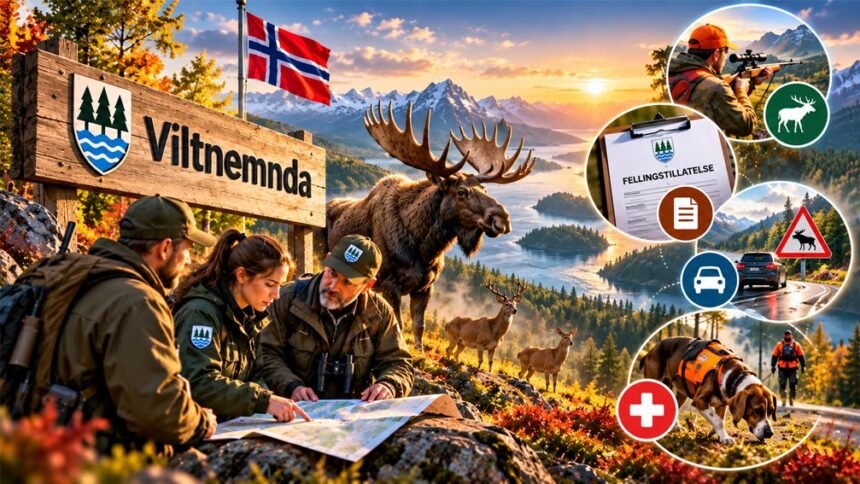
Viltnemnda is a Norwegian term linked to local wildlife management. It usually means a local wildlife board or committee that helps with wildlife matters.
Its work can include deer management, hunting, injured animals, road accidents, and wildlife problems. However, the system is not the same everywhere in Norway.
This guide explains what Viltnemnda means, what it does, and how local wildlife management works in Norway.
What Does Viltnemnda Mean?
Viltnemnda comes from two Norwegian words. Vilt means wildlife or game animals. Nemnd means a board or committee.
So, Viltnemnda can be translated as “the wildlife board” or “the wildlife committee.”
It is not usually an animal rescue center or wildlife charity. It is connected with local government and wildlife management.
Not every municipality uses the name Viltnemnda. Some use other departments, wildlife officers, or special teams for the same type of work.
Is Viltnemnda Still an Official Authority in Norway?
Viltnemnda still exists in some parts of Norway. However, every municipality does not use the same system.
In the past, local wildlife committees had a clearer official role. Changes around 1992–1993 gave municipalities more direct responsibility for local wildlife management.
Today, a municipality may have a formal Viltnemnda. Another may use environmental staff, agricultural staff, or a wildlife officer.
Special teams may also handle practical work. For example, a fallvilt team may deal with injured wildlife, while a tracking team may search for injured animals.
A Viltnemnda can only use powers given to it by law or by the municipality.
Norway’s Wildlife Law and Viltnemnda
Norway has national laws for wildlife management. Municipalities handle many local duties under these laws.
An important change happened on July 1, 2026. The old wildlife law, called Viltloven, was replaced by Viltressursloven.
The law covers wildlife resources, hunting, trapping, and some types of animal control.
Different authorities can handle different wildlife matters. These may include the municipality, Statsforvalteren, Miljødirektoratet, and the police.
Other rules can also apply. For example, Norway has rules about keeping dogs under control around wildlife.
What Does Viltnemnda Do?
The exact work of Viltnemnda depends on the municipality.
It may help with deer populations, hunting areas, management plans, permits, wildlife information, and problems between people and wild animals.
It may also be involved with local wildlife funds and wildlife projects.
Another area is fallvilt, which can include wild animals found dead or injured outside normal hunting.
However, Viltnemnda members do not always do the field work themselves. Trained wildlife teams may deal with injured animals and tracking.
Moose, Red Deer, and Roe Deer Management
Moose, red deer, and roe deer are important animals in Norwegian wildlife management.
Their Norwegian names are:
- Elg – moose
- Hjort – red deer
- Rådyr – roe deer
Local authorities collect information about these animals. They may look at hunting results, animal sightings, health, habitat, and road accidents.
The aim is to keep wildlife populations at suitable levels.
Too many deer can damage crops and young trees. They may also increase the risk of road accidents.
However, taking too many animals through hunting can also reduce the population too much. Local authorities therefore try to find a balance.
Hunting Permits, Quotas, and Management Plans
Municipalities have an important role in local deer hunting.
Their work can include hunting areas, wildlife plans, harvest numbers, and permits.
One important term is fellingstillatelse. It means a permit that allows a certain number of animals to be harvested.
It is not exactly the same as a personal hunting license.
Some larger hunting areas may also use management plans covering several years. These plans help manage wildlife numbers over a longer period.
Hunters must follow the permits, plans, and reporting rules that apply to them.
Viltnemnda may help with these matters if the municipality has given it the authority.
Municipal Wildlife Funds
Some municipalities have a kommunalt viltfond, or municipal wildlife fund.
This money can be used for approved wildlife work. This may include surveys, wildlife projects, habitat work, planning, and population management.
The money cannot simply be used for anything related to animals. Rules decide how the fund can be used.
A Viltnemnda may help manage the fund if the municipality gives it that responsibility.
Viltnemnda and Injured Wildlife
Local wildlife services also deal with injured animals.
This can include animals hit by vehicles, badly injured wildlife, trapped animals, or animals found seriously sick.
The Norwegian term fallvilt is often used for this type of wildlife. It can include animals found injured or dead outside normal hunting.
A fallviltgruppe, or wildlife response team, may handle these cases.
The team can search for an animal, check its injuries, and keep people away if there is danger. If an animal is badly injured and cannot recover, authorized workers may humanely put it down.
People should not try to catch or move a large injured animal themselves.
Tracking Injured Animals
A search for an injured animal is called ettersøk.
An ettersøksjeger is a trained hunter or wildlife tracker who searches for wounded animals.
A trained tracking dog, called an ettersøkshund, may also help.
Trackers can use blood, hair, footprints, scent, and other signs to find the animal.
This is especially useful when a deer or moose runs away after being hit by a vehicle.
People should not follow the animal themselves. Doing so may disturb tracks and make the professional search harder.
What to Do After Hitting a Wild Animal in Norway
If you hit a deer, moose, or another large wild animal, stop somewhere safe.
Turn on your hazard lights. Use a reflective vest and warning triangle when it is safe to do so.
If someone is badly injured, call 113 for emergency medical help.
Wildlife collisions should also be reported to the proper authorities. The information collected for this article identifies the Norwegian police non-emergency number 02800 for these reports.
Tell the police where the accident happened, what animal was involved if you know, and which way it went.
If possible, safely mark the place where the animal left the road.
Do not chase the animal. It may be badly injured even if it can still run.
How Wildlife Collision Response Works
A wildlife accident can involve several services.
The basic process may look like this:
Driver or witness → Police → Local wildlife team → Tracker and dog → Search
The police can contact the correct local wildlife team.
A trained tracker may then search for the animal. If it is badly injured and cannot recover, authorized workers may humanely put it down.
Information about some wildlife accidents is also recorded in Hjorteviltregisteret, Norway’s deer register.
These records can help authorities understand where wildlife accidents happen and how animal populations are changing.
Human-Wildlife Conflicts
Wild animals can sometimes cause problems around farms, forests, gardens, roads, and homes.
For example, deer may eat crops or damage young trees. Large animals near roads can also increase accident risks.
Killing the animal is not always the first solution.
Other options may include fencing, habitat changes, or other ways to keep wildlife away from certain areas.
In some cases, hunting or special culling may be allowed.
A skadefellingstillatelse is a permit that may allow an animal to be killed because it is causing serious damage.
The responsible authority depends on the animal and situation.
Viltnemnda and Dog Leash Rules
Båndtvang is a Norwegian term linked to rules for keeping dogs on a leash or under proper control.
These rules help protect wild animals, especially when they are breeding or raising young.
Some municipalities may also introduce extra rules during difficult conditions, such as deep snow or a hard winter.
In some areas, Viltnemnda may have authority to introduce extra dog-control rules.
However, this is not the same everywhere. Dog owners should always check local rules.
Viltnemnda vs. Other Wildlife Authorities
Viltnemnda is only one part of Norway’s wildlife system.
The municipality handles many local wildlife matters. A Viltnemnda may handle some of these duties if it has been given authority.
A fallvilt or tracking team usually handles practical work with injured animals.
The police can become involved in wildlife accidents, traffic problems, and situations involving public safety.
Statsforvalteren handles some wildlife matters at the regional level.
Miljødirektoratet, or the Norwegian Environment Agency, has national responsibilities for nature and wildlife management.
Which authority you need depends on the animal and the type of problem.
Why Viltnemnda Is Different Between Municipalities
There is no single Viltnemnda system used everywhere in Norway.
Some municipalities still have a wildlife committee. Others use environmental staff, agricultural staff, wildlife officers, or other local workers.
Field work may also be handled by separate wildlife or tracking teams.
Because of this, two municipalities may provide similar services under different names.
Useful terms to search on a municipality’s website include viltnemnd, viltforvaltning, fallvilt, skadet vilt, påkjørt vilt, and ettersøk.
Always check current municipal information because contact details and local services can change.
Who Uses or Contacts Viltnemnda?
Hunters may need information about hunting areas, permits, or wildlife plans.
Landowners may need help with wildlife damage to farms or forests.
Drivers may need help after hitting a wild animal.
Residents may also report sick, trapped, injured, or dead wildlife.
Dog owners may check local rules about keeping dogs under control.
When reporting an animal, give a clear location and explain what happened. If possible, also tell the authorities what animal you saw and which way it went.
Common Norwegian Wildlife Terms
| Norwegian Term | Easy Meaning |
|---|---|
| Viltnemnd | Wildlife board or committee |
| Viltnemnda | The wildlife board or committee |
| Viltforvaltning | Wildlife management |
| Fallvilt | Injured or dead wildlife outside normal hunting |
| Fallviltgruppe | Local wildlife response team |
| Ettersøk | Search for an injured animal |
| Ettersøksjeger | Trained wildlife tracker |
| Ettersøkshund | Tracking dog |
| Viltpåkjørsel | Wildlife-vehicle accident |
| Fellingstillatelse | Harvest or culling permit |
| Skadefelling | Culling an animal because of damage |
| Hjortevilt | Deer species group |
| Vald | Approved hunting area |
| Båndtvang | Dog leash or control rule |
These words can help when searching Norwegian websites for local wildlife information.
Why Local Wildlife Management Matters
Wild animals live close to roads, farms, forests, towns, and homes in many parts of Norway.
Local wildlife management helps keep animal populations healthy. It can also reduce wildlife damage and support safer roads.
It is also important for animal welfare. Fast action after a wildlife accident can reduce the suffering of an injured animal.
Local information helps authorities understand wildlife populations and make better management decisions.
Bottom Line
Viltnemnda means a local wildlife board or committee in Norway. It is not one national organization.
Its role can be different in each municipality. Some places have a formal Viltnemnda, while others use municipal workers, wildlife officers, or special teams.
Its work can include deer management, hunting, injured wildlife, road accidents, and other local wildlife matters.
For local rules, permits, or contact details, it is best to check the official website of the municipality.
Frequently Asked Questions
What does Viltnemnda mean in English?
Viltnemnda means “the wildlife board” or “the wildlife committee.” It is linked to local wildlife management in Norway.
Is Viltnemnda a national organization?
No. It is connected with local municipal wildlife management rather than one national organization.
Does every municipality have a Viltnemnda?
No. Some municipalities have a Viltnemnda, while others use wildlife officers, departments, or special teams.
What does Viltnemnda do?
It may help with deer management, hunting, wildlife plans, injured animals, and other local wildlife issues.
Who should I call after hitting a deer or moose in Norway?
The information collected for this article directs drivers to police on 02800. Call 113 if someone needs urgent medical help.
What is fallvilt?
Fallvilt is a term used for wildlife found injured or dead outside normal hunting. It can include animals involved in road accidents.
What is an ettersøksjeger?
An ettersøksjeger is a trained wildlife tracker who searches for injured animals, often with a tracking dog.
Does Viltnemnda issue hunting permits?
It may help with hunting permits if the municipality has given it that authority. The exact system can differ between municipalities.
More To Explore:
Mimshacks.com Review: Is It Free, Safe, and Useful for Gamers?