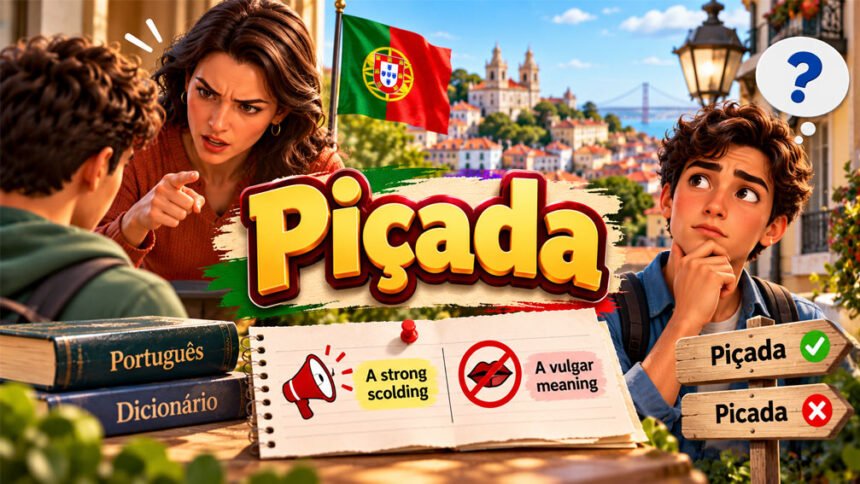
Piçada is an informal Portuguese word. It can mean a strong scolding or telling-off. It also has a separate vulgar sexual meaning, so context is important.
People often confuse Piçada with picada because the two words look very similar. However, they have different meanings. This guide explains what Piçada means, how to pronounce it, where it is used, and how to avoid common mistakes.
What Does Piçada Mean?
Piçada is a Portuguese slang word with more than one meaning.
One meaning is a strong scolding or telling-off. It can describe a situation where someone is strongly criticized for doing something wrong.
For example, a person may receive a Piçada after making a serious mistake. In English, words such as scolding, reprimand, rebuke, or telling-off may be used to explain this meaning.
Piçada also has a separate vulgar sexual meaning. Because of this, you should always look at the full sentence before deciding what the word means.
Is Piçada a Slang or Formal Word?
Piçada is an informal slang word. It is not a good choice for formal or professional situations.
The word can sound crude or inappropriate. This is especially important because one of its meanings is vulgar.
It is better to avoid Piçada in workplace emails, job interviews, school work, customer service messages, and other formal writing.
If you only want to describe a strong correction, words such as scolding or reprimand are safer.
For Portuguese learners, understanding Piçada is usually more useful than trying to use it in conversation.
How to Pronounce Piçada
A simple English pronunciation of Piçada is:
pee-SAH-dah
The exact sound can change slightly depending on the speaker’s Portuguese accent.
The ç in Piçada sounds like an “s.” The mark under the letter is called a cedilla. In Portuguese, ç is called cê-cedilha.
Knowing this sound can make the word easier to pronounce correctly.
Why the Cedilla in Piçada Matters
The ç in Piçada is important. It is part of the correct spelling and should not simply be removed.
In Portuguese, ç gives the letter an “s” sound in words like Piçada.
It also helps separate piçada from picada. These words look similar, but they do not have the same meanings.
In normal writing, piçada usually starts with a lowercase letter. Piçada may be written with a capital P at the beginning of a sentence or in a title.
The capital letter does not change the meaning, but the cedilla is important to the spelling.
Piçada vs. Picada
Piçada and picada are different words.
Piçada, with ç, is the Portuguese slang word discussed in this article. It can mean a strong scolding and also has a vulgar meaning.
Picada, without ç, can have several different meanings. Depending on the language and region, it may mean a bite, sting, puncture, or trail.
Picada can also have food meanings. In some Spanish-speaking places, a picada is a platter of small foods or snacks that people share.
In Catalan cooking, picada can refer to a mixture used when preparing food.
These food meanings belong to picada, not Piçada.
Does Piçada Mean Food?
Piçada should not normally be described as the name of a food or traditional dish.
Most of this confusion comes from the word picada.
In some Spanish-speaking regions, picada can mean a shared platter of small foods. Catalan cooking also uses picada for a different food preparation.
These meanings do not prove that Portuguese Piçada is a food term.
If you see Piçada described as food online, check the original spelling and language. The writer may actually be talking about picada.
How Piçada Is Used in a Sentence
The full sentence can help you understand what Piçada means.
If the sentence is about someone being strongly corrected after making a mistake, Piçada may mean a scolding or reprimand.
For example, a worker who keeps making the same mistake may receive a strong telling-off from a manager.
Words about a parent, teacher, manager, mistake, argument, or criticism can help show that the scolding meaning is intended.
If the conversation has an adult or sexual meaning, Piçada may have its vulgar meaning instead.
If the meaning is still unclear, do not guess. Check a reliable Portuguese dictionary or ask a fluent speaker who understands the regional use.
Why Context Changes the Meaning
Context is very important when understanding Piçada.
The word may describe a scolding in one sentence and have a vulgar meaning in another. This is why one English translation cannot work in every situation.
Look at the topic, nearby words, speaker, audience, tone, and region.
The relationship between people also matters. Friends may sometimes use strong slang as a joke. The same word could sound rude when used with a stranger, teacher, customer, or colleague.
Online messages can be harder to understand because you cannot hear the person’s voice or see their facial expression.
When the meaning is unclear, it is safer to check the context instead of making a quick guess.
Piçada in Portugal and Brazil
Portuguese is spoken in different countries, and slang can change from one place to another.
Some references connect the reprimand meaning of Piçada more closely with Portugal. However, this does not mean everyone in Portugal regularly uses the word.
Slang can change based on a person’s age, location, social group, and background.
Piçada may also appear in Brazilian Portuguese, but Brazilian speakers may use other slang words for similar meanings.
There is not enough reliable information to say that Piçada is equally common in Portugal and Brazil. It is safer to say that its use and familiarity can change by region.
Piçada in Social Media and Informal Conversation
Piçada may appear in online comments, chats, jokes, music, social media posts, or normal informal conversations.
The tone can change depending on the person using it. Friends may sometimes use strong slang as a joke, while another person may find the same word rude.
Social media can make the meaning harder to understand because short posts often do not provide enough context.
There is also not enough reliable evidence to call Piçada a major viral or social media trend. Its appearance online does not create a new official meaning.
When You Should Avoid Using Piçada
Portuguese learners should be careful when using Piçada.
It is better to avoid the word in formal situations or when talking to people you do not know well. This includes professional messages, customer conversations, school work, and formal writing.
However, there are times when writing the word is necessary. For example, you may need to mention it when explaining Portuguese slang, discussing a dictionary meaning, or translating a text.
In these cases, it is useful to explain that Piçada is informal and can be vulgar.
Polite Alternatives to Piçada
There are several safer English words for the nonsexual meaning of Piçada.
Scolding is useful when someone is strongly corrected for doing something wrong.
Reprimand is more formal. It may be used when a manager, teacher, or another person in authority strongly corrects someone.
Rebuke also means strong disapproval, but it sounds more formal.
Telling-off is more casual and is especially common in British English.
You can also simply say someone was sharply criticized.
The best word depends on the situation and how strong the original statement is.
Common Mistakes With Piçada
A common mistake is confusing Piçada with picada. They look similar but have different meanings.
Another mistake is removing the cedilla and thinking the meaning stays the same. This may cause search engines and translation tools to show information about picada instead.
Some websites may say Piçada means a trail, path, bite, sting, or food platter. These meanings are usually connected with picada or other similar words.
It is also wrong to describe Piçada only as a harmless word for a scolding. Its vulgar meaning should also be considered.
Another mistake is thinking every Portuguese speaker uses Piçada in the same way. Slang can change between countries, regions, ages, and social groups.
Translation tools may also show only one meaning. Reading the full sentence is often a better way to understand slang.
How to Understand Piçada When You See It Online
If you see Piçada online, first read the complete sentence.
Look at what people are discussing. If the topic is a mistake, criticism, argument, or correction, the word may mean a scolding.
If the conversation is sexual or adult in nature, it may have its vulgar meaning.
The writer’s location can also help. Portuguese slang may be used differently in Portugal, Brazil, and other Portuguese-speaking places.
Check the spelling too. If the discussion is about food, a bite, a sting, or a trail, the writer may actually mean picada.
If you are still unsure, check a reliable Portuguese dictionary or ask a fluent speaker who understands the regional language.
What Portuguese Learners Should Know
Slang is useful for understanding real conversations, but learners do not need to use every slang word they learn.
Piçada is a good example. Knowing its meanings can help you understand Portuguese conversations and online posts. Using it without knowing the context could cause confusion.
Remember four things: spelling, context, tone, and region.
Spelling helps you separate Piçada from similar words. Context helps you find the right meaning. Tone shows whether someone is serious or joking. Region can affect how common or offensive a word sounds.
When you are unsure, a simple and neutral word is usually the safer choice.
Bottom Line
Piçada is an informal Portuguese slang word with more than one meaning. It can mean a strong scolding, reprimand, or telling-off. It also has a separate vulgar sexual meaning.
Piçada should not be confused with picada. Picada is a different word that can refer to bites, stings, trails, and some types of food depending on the language and region.
The best way to understand Piçada is to look at the full sentence, topic, tone, and region. Portuguese learners should also be careful about using the word themselves.
Frequently Asked Questions
What does Piçada mean in English?
Piçada can mean a strong scolding, reprimand, or telling-off. It also has a separate vulgar meaning, so context is important.
Is Piçada a Portuguese slang word?
Yes. Piçada is an informal Portuguese slang word. It can sound crude, so it is better avoided in formal situations.
Does Piçada have a vulgar meaning?
Yes. Piçada also has a vulgar sexual meaning. The sentence and situation help show which meaning is intended.
How do you pronounce Piçada?
A simple English pronunciation is pee-SAH-dah. The ç sounds like an “s.”
Is Piçada the same as picada?
No. They are different words. Picada can mean a bite, sting, trail, or certain types of food depending on the region.
Does Piçada mean food?
Normally, no. Food-related meanings usually belong to picada, without the cedilla.
Is Piçada commonly used in Brazil?
Its use can change by region and speaker. Some references connect the reprimand meaning more closely with Portugal.
Should Portuguese learners use Piçada?
It is usually safer to understand the word rather than use it. Choose a neutral word when you are unsure about the meaning or tone.
More To Explore:
What Is Tsunaihaiya? History, Jewelry, Meaning, and Key Facts