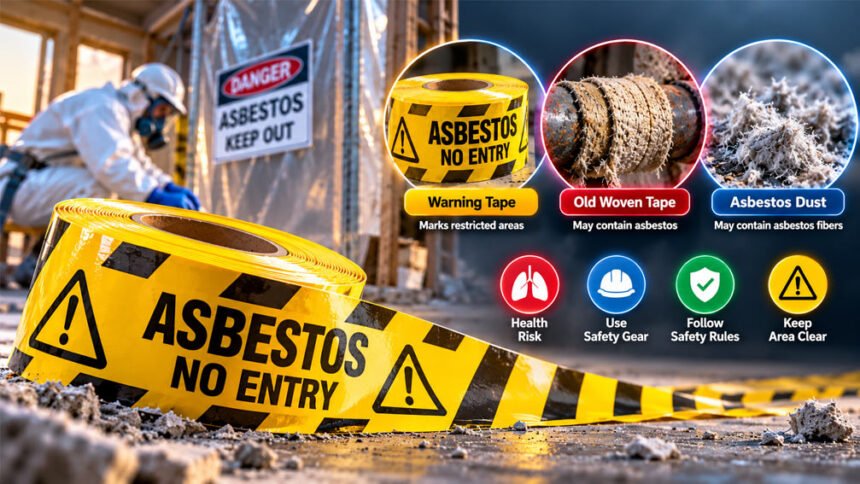
Asbestlint is a term with more than one meaning. It usually means warning tape used around places where asbestos is present or may be present. In some older uses, it can also mean woven tape that may contain asbestos.
Some websites also use Asbestlint for dust that may contain asbestos fibers. However, this is not an official scientific or safety term.
This guide explains what Asbestlint is, its different types, where it is used, and the main safety facts you should know.
What Is Asbestlint?
Asbestlint most commonly means warning tape used around an asbestos area. Workers use it to show that people should not enter a certain place.
The tape may have words such as “ASBEST,” “ASBESTOS,” “NO ENTRY,” or “GEEN TOEGANG.” The Dutch words “Geen Toegang” mean “No Entry.”
Modern Asbestlint is usually made from plastic. The warning tape itself does not normally contain asbestos.
However, the word can also describe old woven tape that was used for insulation and protection from heat. Some of these older products contained asbestos.
Some websites also use Asbestlint to describe dust that may contain asbestos fibers. This is an informal use of the word and is not an official scientific or workplace safety term.
The Different Types of Asbestlint
The term Asbestlint can have three main meanings.
The first is modern asbestos warning tape. It is usually bright plastic tape with clear warning words. Its job is to tell people that an area may have an asbestos risk.
The second is old woven asbestos tape. This type of material was once used for insulation and heat protection. Some old woven tapes contained asbestos.
The third meaning is dust or lint that may contain asbestos fibers. This meaning appears on some websites but is not an official name used by asbestos professionals.
These three things are very different. Modern plastic warning tape should not be confused with old woven asbestos material.
Modern Asbestlint Warning Tape
Modern Asbestlint is made to be easy to see. It normally has bright colors and large warning words.
Yellow and black are common colors, but the design can change between products and countries. Some tapes have the word “ASBEST” printed many times along the roll.
One Dutch example says “ASBEST – GEEN TOEGANG.” This means “Asbestos – No Entry.”
Many types of warning tape are made from flexible plastic. Some products use LDPE, which is a type of polyethylene.
The size can also be different. One example found in the collected information is 5 cm wide and 500 metres long. This is only one example and is not the standard size for every product.
The most important thing is that the tape is easy to see and read.
Why Is Asbestlint Used?
The main purpose of Asbestlint is to warn people and keep them away from a restricted area.
During asbestos work, some areas may only be open to trained or approved workers. The tape shows where the restricted area starts.
It also tells people why the area is closed. Normal barrier tape may only tell someone to stay away. Asbestlint clearly shows that asbestos is the reason for the warning.
The tape may be used with other safety measures, such as warning signs, barriers, protective clothing, breathing protection, and controlled entrances.
Asbestlint itself does not stop asbestos fibers. Its main job is to warn people and mark an area.
Where Is Asbestlint Used?
Asbestlint may be used anywhere asbestos is known or suspected.
It is often used during asbestos surveys, removal work, renovation, demolition, and cleanup.
Workers may put the tape across a doorway, around a room, between posts, or around an outdoor work area.
It may also be used around asbestos waste or storage areas. On larger worksites, it can help show which places people should not enter.
Workers may also use the tape when they find material that could contain asbestos. For example, old insulation may be found during renovation. The area can then be marked while experts check the material.
Seeing Asbestlint does not always mean asbestos has been confirmed. Sometimes the tape is used as a safety step while a possible risk is being checked.
Asbestlint vs Regular Barrier Tape
Regular barrier tape can be used for many types of danger. It may be placed around construction work, damaged areas, closed paths, or other unsafe places.
Asbestlint is more specific. It tells people that the warning is related to asbestos.
This makes the reason for the restricted area easier to understand.
The colors and wording may be different between products. The main goal is to make the warning clear and easy to see.
What Asbestlint Cannot Do
Asbestlint is only a warning and boundary marker. It cannot make an asbestos area safe by itself.
The tape cannot catch asbestos fibers or clean the air. It also cannot stop small fibers from moving through the air.
It cannot replace an asbestos survey or proper testing. Seeing warning tape does not prove that asbestos is present. Removing the tape also does not mean the area is safe.
Depending on the job, workers may need proper barriers, protective clothing, breathing protection, controlled entry, safe cleaning methods, and correct waste handling.
The safety steps needed depend on the work and local rules.
Old Woven Asbestlint
Old woven Asbestlint is very different from modern plastic warning tape.
In the past, asbestos was used in some woven products because it could handle high temperatures. These products included tapes, cloths, ropes, and other insulation materials.
Woven asbestos tape could be found around pipes, boilers, furnaces, electrical equipment, machines, and heating systems. Similar materials were also used in ships and industrial areas.
Old tape may look like cloth, webbing, rough fabric, or a bandage. It can become weak or damaged as it gets older.
Some of these old tapes actually contain asbestos. If the material is cut, drilled, sanded, scraped, broken, or damaged, small fibers may enter the air.
However, an old woven tape should not automatically be called asbestos. Fiberglass and other materials can look similar.
Can You Identify Asbestos Tape by Looking at It?
No. You cannot safely confirm asbestos just by looking at a material.
Old tape may look white, gray, rough, or like cloth. However, these features do not prove that asbestos is present.
A photo may help an expert understand what the material could be, but a photo alone cannot confirm that it contains asbestos.
Do not tear, cut, scrape, sand, drill, or burn the material to test it yourself. This could create dust and release fibers if asbestos is present.
A professional check and laboratory testing may be needed to confirm what the material contains.
What Is Asbestos Dust or “Asbestlint”?
Some websites use Asbestlint to describe fine dust or lint that may contain asbestos fibers.
This is not an official scientific or workplace safety term. Professionals normally use words such as asbestos fibers, airborne asbestos fibers, asbestos dust, or asbestos-containing material (ACM).
Dust that looks gray, fluffy, or fibrous does not automatically contain asbestos. Many other materials can create similar dust.
However, dust should not be assumed safe just because it looks normal. Dust found near damaged old insulation or other possible asbestos materials may need to be checked.
You cannot confirm asbestos from the color or look of the dust alone.
How Asbestos Fibers Become Airborne
Asbestos fibers can stay inside a material when it is in good condition and is not disturbed.
Problems can happen when the material becomes damaged or is worked on.
Cutting, drilling, sanding, scraping, breaking, or removing material that contains asbestos may release small fibers into the air.
This is why renovation and demolition can create a risk. Workers may open an old wall, remove insulation, drill into a panel, or remove old flooring without knowing asbestos is present.
Once the fibers enter the air, people nearby may breathe them in. The fibers may be too small to see, smell, or feel.
This is why people should not judge asbestos risk only by looking for visible dust.
Health Risks of Asbestos Exposure
Clean modern Asbestlint warning tape is not the main health risk. The danger comes from breathing in asbestos fibers released from materials that contain asbestos.
Asbestos exposure is linked to serious diseases. These include mesothelioma, lung cancer, and asbestosis.
Some asbestos-related diseases can take many years to appear. A person may feel healthy when exposure happens but develop health problems much later.
Having asbestos-containing material inside a building does not always mean fibers are in the air. Material that is in good condition and left alone may present less risk than damaged or disturbed material.
What to Do If You Find Suspected Asbestlint
If you find old woven tape or another material that may contain asbestos, avoid touching or disturbing it.
Do not cut, drill, sand, scrape, tear, or break the material to check what it is.
Keep people away if there is a real reason to think asbestos may be present.
At a workplace, tell the site manager or the person responsible for safety. At home, you may need advice from a qualified asbestos professional.
Do not sweep suspicious dust or use a normal household vacuum on it before it has been properly checked. This may move dust into other areas.
A professional can check the material and decide what should happen next. It may need testing, safe management, sealing, or professional removal.
Asbestlint During Renovation and Demolition
Renovation and demolition can disturb old materials that have not been touched for many years.
Workers may find old insulation, flooring, panels, pipe coverings, woven tape, or other unknown materials when opening walls, ceilings, and floors.
Builders, electricians, plumbers, decorators, and maintenance workers may all find hidden asbestos-containing materials during their work.
It is safer to check possible asbestos risks before cutting, drilling, or removing unknown older materials.
If suspicious material is found after work starts, avoid disturbing it further. Modern Asbestlint may be used to mark the area while the possible risk is checked.
How to Use Modern Asbestlint Safely
Asbestlint should be placed where people can easily see it before they enter a restricted area.
It can be attached to stable posts, fences, barriers, or other strong points.
Entrances should be clearly marked. Warning signs may also be needed to give people more information.
The tape should be checked during the work. Wind, rain, vehicles, tools, and people can cause it to become loose or damaged.
Torn or fallen tape should be replaced when needed.
Unused rolls should be stored in a clean area and kept away from possible asbestos contamination.
Warning tape should always be treated as one part of the safety system. It should not replace other asbestos controls when they are required.
Handling Used Asbestlint
New plastic Asbestlint does not normally contain asbestos.
However, tape used in or close to an asbestos work area may collect dust or fibers on its surface.
Workers should not automatically treat used tape as clean.
Tape that may be contaminated should be handled under the site’s asbestos safety rules. It should not be moved into clean areas without care.
Waste rules are different in different places. Potentially contaminated tape should be handled and thrown away according to local asbestos waste rules.
Asbestos Rules and Legal Requirements
Asbestos laws are different around the world.
Rules may cover asbestos surveys, testing, worker training, removal, warning signs, protective equipment, transport, and waste disposal.
Some information about Asbestlint comes from the Netherlands. Dutch asbestos rules should not be treated as rules for every country.
Some asbestos jobs must be handled by trained or certified professionals. A survey or official notice may also be required before certain types of work.
Property owners, employers, and workers should check the asbestos rules for their own area.
Putting Asbestlint around an area does not give an untrained person permission to remove asbestos.
Common Asbestlint Safety Mistakes
One mistake is thinking every type of Asbestlint is the same. Modern plastic warning tape and old woven asbestos tape are very different.
Another mistake is thinking warning tape makes an area safe. The tape only gives a warning and marks a boundary.
People may also think old woven tape is safe because it looks like normal cloth. Its appearance cannot prove whether it contains asbestos.
Do not cross asbestos warning tape simply because the area looks clean. Asbestos fibers may be too small to see.
Do not break, cut, burn, scrape, or rub suspected material to identify it.
Suspicious dust should also not be cleaned like normal household dust until the risk has been properly checked.
Used warning tape that may be contaminated should not automatically be placed in normal waste.
It is also important to think about possible asbestos before drilling, cutting, or removing unknown materials in older buildings.
Bottom Line
Asbestlint can mean different things.
Today, it most commonly means plastic warning tape used to mark an area where asbestos is present or suspected. This tape does not normally contain asbestos.
The term can also describe old woven tape used for insulation and heat protection. Some of these older products contained asbestos.
Some websites also use Asbestlint for dust that may contain asbestos fibers, but this is not an official professional term.
Modern warning tape can help keep people away from a restricted area, but it cannot stop asbestos fibers. If you find old woven material that may contain asbestos, avoid disturbing it and follow the safety rules for your area.
Frequently Asked Questions
What is Asbestlint?
Asbestlint is usually warning tape used to mark places where asbestos may be present.
Does Asbestlint contain asbestos?
Modern warning tape normally does not contain asbestos. Some old woven tapes may contain it.
What does Asbestlint look like?
Modern Asbestlint is usually bright tape with warning words. Old types may look like cloth or woven fabric.
Is Asbestlint dangerous?
Modern warning tape is not normally dangerous. Old tape containing asbestos can be harmful if damaged or disturbed.
Can Asbestlint stop asbestos fibers?
No. It only marks a restricted area and warns people to stay away.
Can you identify asbestos tape from a photo?
Not always. Proper testing may be needed to know if a material contains asbestos.
What should I do if I find old woven tape?
Do not touch, cut, or damage it. Ask a qualified asbestos professional for help.
Can Asbestlint be thrown in normal waste?
Clean warning tape may be normal waste. Tape that may have asbestos dust on it should follow local asbestos waste rules.
More To Explore:
Pyntekvister Guide: Meaning, Branch Types, Styling, and Care