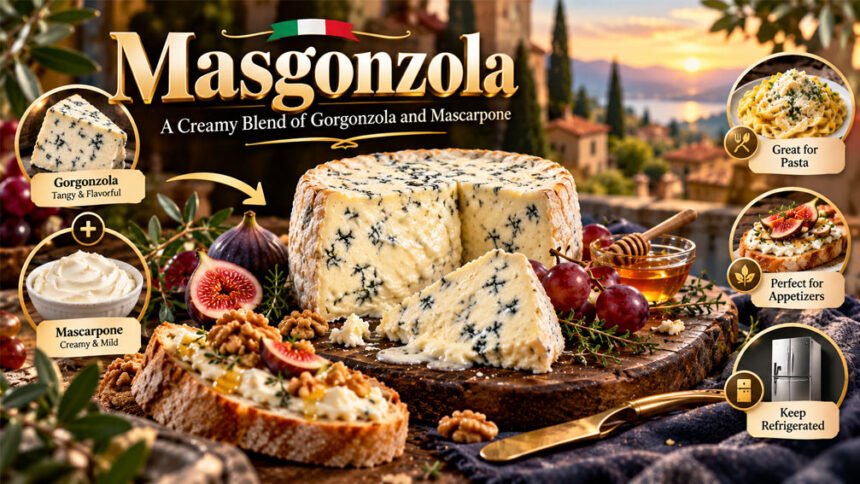
Masgonzola is a creamy cheese made with Gorgonzola and mascarpone. Gorgonzola gives it a salty blue cheese taste. Mascarpone makes it soft, creamy, and mild.
The name Masgonzola can be confusing. It sounds like a separate Italian cheese, but it is better known as a mix of Gorgonzola and mascarpone.
This guide explains what Masgonzola is, what it tastes like, how it is made, and how to use and store it.
What Is Masgonzola?
Masgonzola is usually a mix of Gorgonzola and mascarpone. The two cheeses have very different tastes and textures.
Gorgonzola is a blue cheese. It has a salty, tangy, and sometimes strong taste. Mascarpone is soft, smooth, creamy, and mild.
When they are combined, mascarpone makes the Gorgonzola taste less strong. The result is a softer and creamier cheese.
There is no single recipe for Masgonzola. Some makers mix the two cheeses together. Others put them in layers.
The amount of each cheese can also be different. This means one Masgonzola product may taste mild, while another may have a stronger blue cheese taste.
Where Does the Name Masgonzola Come From?
The name Masgonzola appears to combine the words mascarpone and Gorgonzola.
“Mas” comes from mascarpone, while “gonzola” comes from Gorgonzola.
There is no strong proof that Masgonzola is an old historical cheese name. It is better understood as a simple name for this cheese combination.
You may also find the same type of product under names such as:
- Gorgonzola and Mascarpone
- Gorgonzola e Mascarpone
- Gorgonzola-Mascarpone
- Gorgonzola with Mascarpone
The name can change between brands and shops.
Is Masgonzola a Real Italian Cheese?
Yes, the cheese combination is real. Cheese makers and shops sell products made with Gorgonzola and mascarpone.
However, Masgonzola is not confirmed as a separate protected Italian cheese.
Gorgonzola has Protected Designation of Origin (PDO/DOP) status. This means there are official rules about where and how real Gorgonzola is made.
Masgonzola does not have its own confirmed PDO status. It also does not have one official recipe or production method.
Some websites describe Masgonzola as an old Italian cheese with its own history and aging process. There is not enough reliable evidence to support these claims.
It is more accurate to describe Masgonzola as a Gorgonzola and mascarpone cheese specialty.
What Is Masgonzola Made Of?
Masgonzola has two main ingredients: Gorgonzola and mascarpone.
Gorgonzola is an Italian blue cheese made from cow’s milk. It has blue or blue-green veins. Its taste can be salty, tangy, earthy, and sharp.
Mascarpone is pale, soft, smooth, and mild. It helps make the strong Gorgonzola taste softer.
Some products use 50% Gorgonzola and 50% mascarpone. However, this is not a rule for every product.
More mascarpone usually makes Masgonzola softer and milder. More Gorgonzola gives it a stronger blue cheese taste.
Check the ingredient label if you want to know the exact mix.
How Is Masgonzola Made?
There is no single official way to make Masgonzola.
One method is to mix Gorgonzola and mascarpone together. This creates a smooth and creamy cheese.
Another method is to put the two cheeses in layers.
A layered version may have pale mascarpone between pieces of blue-veined Gorgonzola. This makes both cheeses easy to see.
Each bite may also taste a little different. One part may have more mascarpone, while another may have more Gorgonzola.
The Gorgonzola is already made and aged before it is combined with mascarpone. Masgonzola does not have its own separate aging process.
What Does Masgonzola Taste Like?
Masgonzola usually tastes creamy, buttery, salty, tangy, and slightly earthy.
Gorgonzola gives it most of its strong flavor. Mascarpone adds a mild and creamy taste.
This makes Masgonzola less strong than plain Gorgonzola. It may be easier to enjoy for people who find blue cheese too sharp.
The taste can change from product to product.
More mascarpone makes it milder. More Gorgonzola makes it stronger and saltier.
The type of Gorgonzola used can also change the taste.
Texture, Appearance, and Aroma
Masgonzola is usually soft, creamy, moist, and easy to spread.
A layered version may have white or pale mascarpone next to blue-veined Gorgonzola. A mixed version may have a more even appearance.
Masgonzola is firmer when it is cold. It becomes softer as it warms slightly.
It also melts easily. This makes it useful for pasta, risotto, pizza, and sauces.
Its smell mainly comes from the Gorgonzola. A product with more Gorgonzola may have a stronger blue cheese smell.
Masgonzola vs. Gorgonzola
Masgonzola and Gorgonzola are not the same.
Gorgonzola is an Italian blue cheese. Masgonzola combines Gorgonzola with mascarpone.
Plain Gorgonzola usually has a stronger blue cheese taste. Masgonzola is normally softer, creamier, richer, and milder.
Gorgonzola also has official production and aging rules. Masgonzola does not have its own official aging process.
Gorgonzola can be better when you want a strong blue cheese taste. Masgonzola is useful when you want both creaminess and blue cheese flavor.
Masgonzola vs. Mascarpone
Mascarpone is one of the main parts of Masgonzola, but they are not the same.
Plain mascarpone is soft, rich, creamy, and mild. It does not have blue veins or a strong salty taste.
Masgonzola has a stronger taste because it also contains Gorgonzola.
If you cannot find Masgonzola, you can mix Gorgonzola and mascarpone at home.
Use more mascarpone for a mild taste. Use more Gorgonzola if you want a stronger blue cheese flavor.
Masgonzola Nutrition and Calories
Masgonzola does not have one fixed nutrition profile. The numbers depend on the product and the amount of each cheese used.
One 50/50 Gorgonzola and mascarpone product has about 369 calories per 100 grams.
It also has about:
- 35 grams of fat
- 23 grams of saturated fat
- 1.5 grams of carbohydrates
- 12 grams of protein
- 0.7 grams of salt
A 30-gram serving of this product has about 111 calories.
Other products may have different nutrition values. Always check the package for exact information.
Is Masgonzola Healthy?
Masgonzola can be part of a balanced diet, but it is a rich cheese.
It can provide protein and some minerals. However, it can also contain a lot of fat, saturated fat, and calories.
A small serving is often enough because the cheese has a rich taste.
You can eat it with fruit, vegetables, or whole grains to make a more balanced meal.
If you are watching your calories, fat, or salt, check the nutrition label before eating it.
Is Masgonzola Lactose-Free?
Masgonzola should not automatically be called lactose-free.
Gorgonzola can naturally contain very little lactose. However, Masgonzola also contains mascarpone.
The mascarpone can change the amount of lactose in the final product.
If you have lactose intolerance, check the package for clear lactose information.
A milk allergy is different from lactose intolerance. Masgonzola contains milk, so it is not suitable for someone with a milk allergy.
Best Ways to Eat Masgonzola Cold
Masgonzola is easy to eat without cooking.
You can spread it on bread, toast, baguette, crackers, or crostini.
It also works in sandwiches or on a cheese board. Fruit and nuts can help balance its salty and creamy taste.
Masgonzola is firmer when it comes out of the fridge. Letting it soften slightly can make it easier to spread.
You only need a small amount because it is a rich cheese.
How to Use Masgonzola in Cooking
Masgonzola melts easily, so it works well in hot food.
You can add a small amount to warm pasta. A little pasta water can help turn the melted cheese into a smooth sauce.
It can be used with gnocchi, ravioli, pappardelle, and other types of pasta.
You can also stir Masgonzola into risotto near the end of cooking. It makes the rice creamy and adds a light blue cheese taste.
Small pieces can be added to pizza or flatbread. It also works with potatoes, mushrooms, pumpkin, and other cooked vegetables.
Use gentle heat when making a sauce. Very high heat is not needed.
Because Masgonzola already contains mascarpone, you may not need much extra cream.
Foods That Pair Well With Masgonzola
Sweet fruit can balance the salty taste of Masgonzola.
Good choices include pears, apples, figs, grapes, and dates. Honey and mild fruit spreads can also work well.
Walnuts, hazelnuts, and almonds add crunch.
Mushrooms work well because their earthy taste matches the blue cheese flavor.
Pumpkin and caramelized onions add mild sweetness. Arugula adds a fresh and slightly bitter taste.
One simple appetizer is a date filled with Masgonzola and topped with walnuts and arugula.
Bread, toast, crackers, and crostini are also good choices.
Try to keep the pairings simple. Too many strong ingredients can hide the taste of the cheese.
How to Buy Masgonzola
Masgonzola may be sold in supermarkets, Italian food shops, cheese shops, and some online food stores.
You may not always see the word Masgonzola on the package.
Look for names such as:
- Gorgonzola and Mascarpone
- Gorgonzola e Mascarpone
- Gorgonzola-Mascarpone
- Gorgonzola with Mascarpone
This type of cheese has been sold by retailers such as Coop and Migros in Switzerland.
Check the amount of each cheese when it is listed. More mascarpone usually means a milder product. More Gorgonzola usually means a stronger taste.
Also check the ingredients, allergens, nutrition information, use-by date, storage instructions, and lactose information.
How to Store Masgonzola
Keep Masgonzola in the refrigerator.
Follow the storage instructions on the package. One commercial Gorgonzola and mascarpone product recommends keeping it at 5°C or below.
After opening it, keep the cheese covered. You can use its package, tight wrapping, or a closed food container.
This helps stop the cheese from drying out. It can also stop its smell from spreading to other food.
Use a clean knife when cutting or serving it.
Do not leave Masgonzola in a warm place for a long time. Put unused cheese back in the fridge.
There is no single shelf life for every product. Follow the use-by date and after-opening instructions on the package.
How to Tell If Masgonzola Has Gone Bad
Masgonzola can be difficult to check because Gorgonzola naturally contains blue or blue-green mold.
These blue veins are normal. They do not mean the cheese has gone bad.
Instead, look for changes that are different from the cheese’s normal appearance, smell, or texture.
An unusual bad smell, strange new colors, or a major change in texture may be signs of a problem.
Also check the use-by date. If the cheese was not stored correctly or you are not sure if it is safe, do not eat it.
Common Misunderstandings About Masgonzola
There are several common misunderstandings about Masgonzola.
Masgonzola is not another name for plain Gorgonzola. It contains Gorgonzola and mascarpone.
It is also not the same as plain mascarpone.
Not every Masgonzola product contains exactly 50% Gorgonzola and 50% mascarpone. The amount can change between products.
Its calories, fat, protein, salt, and other nutrition values can also vary.
Masgonzola should not automatically be called lactose-free because it contains mascarpone.
There is also no strong evidence that Masgonzola is an ancient Italian cheese with its own official aging process or protected PDO status.
It is best understood as a Gorgonzola and mascarpone cheese specialty.
Bottom Line
Masgonzola combines Gorgonzola with creamy mascarpone.
Gorgonzola gives it a salty and tangy blue cheese taste. Mascarpone makes it softer, richer, and milder.
It can be mixed or layered. There is no single recipe used by every producer.
Masgonzola can be used in pasta, risotto, pizza, bread, appetizers, and cheese boards. It also works well with fruit, nuts, mushrooms, and honey.
When buying Masgonzola, check the product label. This will tell you the ingredients, nutrition, allergens, storage instructions, and other important details.
Frequently Asked Questions
What is Masgonzola?
Masgonzola is a cheese specialty made with Gorgonzola and mascarpone. It is creamy, rich, and usually milder than plain Gorgonzola.
Is Masgonzola a real cheese?
Yes, the cheese combination is real. However, Masgonzola is not confirmed as its own protected cheese variety.
Is Masgonzola the same as Gorgonzola?
No. Gorgonzola is an Italian blue cheese. Masgonzola combines Gorgonzola with creamy mascarpone.
What does Masgonzola taste like?
It tastes creamy, buttery, salty, and tangy. The exact taste depends on how much Gorgonzola and mascarpone it contains.
How do you eat Masgonzola?
You can spread it on bread or crackers. You can also use it in pasta, risotto, pizza, sauces, and appetizers.
What can I use instead of Masgonzola?
Mix Gorgonzola with mascarpone. Add more mascarpone for a mild taste or more Gorgonzola for a stronger taste.
Is Masgonzola lactose-free?
Not always. Masgonzola contains mascarpone, so check the package if you need a lactose-free product.
How should Masgonzola be stored?
Keep Masgonzola covered in the refrigerator. Follow the storage temperature and use-by date on the package.
More To Explore:
RepMold Review: Uses, Benefits, Challenges, and What Is Verified