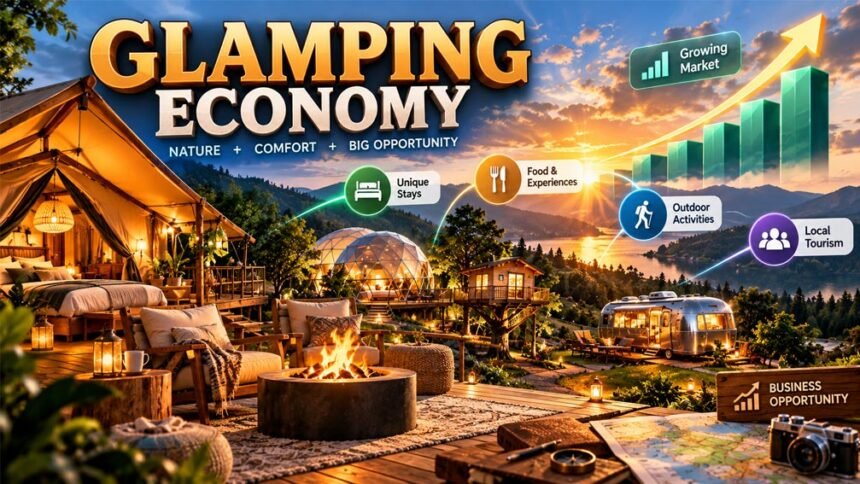
The glamping economy is the business created around comfortable outdoor stays. It includes glamping sites, booking websites, food, activities, equipment, cleaning, and other services.
Glamping has become popular because people want to enjoy nature without giving up comfort. This guide explains how the glamping economy works, how businesses make money, its costs, benefits, and main challenges.
What Is the Glamping Economy?
The glamping economy is the wider business around glamping. The word glamping comes from “glamorous” and “camping.”
Glamping lets people enjoy nature with more comfort than normal camping. Guests may get a real bed, electricity, heating, cooling, Wi-Fi, a kitchen, and a private bathroom.
The glamping economy includes much more than the place to sleep. It can include land, booking services, cleaning, food, transport, activities, electricity, water, and local tourism businesses.
For example, a guest may book a cabin, buy breakfast, rent a bike, take a guided tour, and eat at a nearby restaurant. All of this spending can be part of the glamping economy.
Glamping is therefore a form of outdoor hospitality. There is no single company behind it. Many landowners, resorts, booking companies, suppliers, and local businesses are part of the market.
How Did Glamping Become Popular?
Comfortable outdoor stays existed long before the word glamping became popular. Furnished tents were used by wealthy travelers and safari guests many years ago.
Modern glamping took this idea and made it part of the tourism industry. Guests no longer need to bring all their own camping equipment.
The word glamping started appearing in the 2000s. The Oxford English Dictionary records its use from 2005 and added the word in 2016.
Glamping became more popular as people started looking for unusual places to stay. Social media also helped people discover cabins, domes, treehouses, and luxury tents.
Outdoor travel gained more attention during the COVID-19 pandemic. Many people became interested in holidays with more outdoor space.
Remote work also helped create workcation glamping. Some properties offer Wi-Fi and work areas so guests can work while staying close to nature.
How Big Is the Glamping Market?
Glamping is now a multi-billion-dollar market.
Grand View Research estimated the global glamping market at about $3.79 billion in 2025. It expects the market could reach around $7.87 billion by 2033.
The estimated growth rate is about 9.5% per year from 2026 to 2033.
North America is an important market. Its glamping market was estimated at about $993.2 million in 2025.
Europe also has a large glamping market. Research estimates suggest it held around 35% of global glamping revenue in 2025.
Cabins and pods are an important part of the industry. Other popular options include tents, yurts, domes, treehouses, and trailers.
These numbers are market estimates. Different research companies may report different figures because they use different methods and definitions.
Why Is the Glamping Economy Growing?
Many people like nature but do not enjoy normal camping.
Traditional camping may require tents, sleeping bags, cooking equipment, and time to set everything up. Glamping makes the experience easier.
Guests can arrive and find a bed, electricity, furniture, heating, cooling, and bathroom facilities already available.
Glamping also offers unusual places to stay. People can sleep in treehouses, domes, safari tents, cabins, or vintage trailers instead of normal hotel rooms.
Couples, families, groups, and people who do not normally camp can all use glamping accommodation.
Wellness travel is another reason for its growth. Some properties offer yoga, saunas, massages, walking, meditation, or stargazing.
Social media also helps glamping businesses. Attractive and unusual properties are easy for guests to photograph and share.
Some travelers are also interested in more sustainable holidays. However, a glamping site is not automatically eco-friendly. Its environmental impact depends on how it is built and managed.
Types of Glamping Accommodation
Glamping comes in many forms.
Safari tents are large furnished tents. They may have beds, electricity, furniture, kitchens, and bathrooms.
Bell tents are usually simpler. They may contain beds, rugs, lights, and seating.
Yurts are round structures. Modern yurts can have electricity, heating, furniture, and other comforts.
Cabins and pods provide stronger protection from weather. They may include kitchens, bathrooms, heating, and air conditioning.
Geodesic domes are round structures that often have large windows. They are popular in places with mountain, forest, or night-sky views.
Treehouses offer accommodation above the ground. Some are simple, while others have bathrooms, heating, and luxury facilities.
Tiny homes and shepherd’s huts provide small but comfortable indoor spaces.
Some businesses also turn shipping containers into accommodation by adding windows, beds, kitchens, bathrooms, and climate control.
RVs and vintage trailers can also be used for glamping.
Not every glamping property offers the same level of comfort. Guests should always check the actual facilities before booking.
How Does the Glamping Business Model Work?
A glamping business usually needs suitable land and accommodation.
The owner may buy land, rent it, or work with an existing farm, campground, vineyard, or resort.
The property may need electricity, water, toilets, parking, paths, internet, heating, cooling, and wastewater systems.
Once the site is ready, guests can book through the property’s own website or a third-party booking platform.
The operator then manages check-in, cleaning, laundry, maintenance, guest questions, and other daily work.
Small properties may be managed by the owner. Larger glamping resorts may have cleaners, reception staff, maintenance workers, guides, and other employees.
Some operators also work with nearby businesses. For example, a farm may provide the land while another company manages the accommodation.
How Do Glamping Businesses Make Money?
Guest bookings are usually the main source of income.
The nightly price depends on location, season, accommodation type, facilities, and demand.
Properties with private bathrooms, hot tubs, beautiful views, or more space may charge higher prices.
Glamping businesses can also earn money from extra services.
These may include breakfast, meals, firewood, bike rentals, guided walks, kayaking, stargazing, yoga, massages, and other activities.
Some sites also host birthdays, weddings, anniversaries, company retreats, and private events.
Operators may work with nearby farms, restaurants, wineries, guides, and activity companies.
These extra services can increase the amount a guest spends during a stay.
How Much Does Glamping Cost for Guests?
There is no fixed price for glamping.
Some basic North American glamping stays are reported at around $80 to $150 per night.
Mid-range properties may cost around $150 to $300 per night.
Luxury glamping can cost $300 to $600 or more per night. Some high-end resorts can be much more expensive.
These are only general examples. Actual prices depend on the property and location.
Places near beaches, mountains, national parks, or popular tourist areas may charge more.
Prices can also increase during weekends, holidays, and busy travel seasons.
More expensive properties usually offer more facilities. These may include private bathrooms, kitchens, air conditioning, premium beds, decks, or hot tubs.
How Much Does It Cost to Start a Glamping Business?
There is no fixed startup cost.
A small site on existing land may cost much less than a large luxury glamping resort.
Major costs can include land, accommodation, site preparation, roads, parking, electricity, water, bathrooms, furniture, heating, cooling, and internet.
Businesses may also need permits, insurance, booking software, photography, and marketing.
Some industry sources report costs of $30,000 to $100,000 or more for purpose-built yurts, cabins, or domes with related setup. This is only a general estimate.
Someone who already owns an RV may spend less. However, they may still need to pay for utilities, decking, furniture, permits, and site preparation.
The real cost depends heavily on the location and type of business.
Running Costs and Profitability
Glamping businesses have regular expenses.
These can include cleaning, staff, electricity, water, internet, insurance, repairs, booking fees, marketing, taxes, and permits.
Outdoor accommodation also needs maintenance because it is exposed to rain, sun, wind, snow, and other weather.
Two important numbers are the nightly price and occupancy rate.
For example, charging $200 per night does not mean a property will earn $73,000 every year. It would need to be booked every night to reach that amount.
Seasonality also affects income. Some properties may have only a few months of strong demand.
Some industry sources report profit margins of 30% to 50%. However, this is not guaranteed.
Actual profit depends on costs, bookings, prices, location, taxes, maintenance, and many other factors.
RVs and the Glamping Economy
RVs can also be used as glamping accommodation.
Instead of driving the RV, guests stay in one that is already parked and prepared for them.
Vintage Airstreams, travel trailers, campervans, fifth wheels, and motorhomes can all be used.
People who already own an RV may have lower startup costs than someone building a new cabin or dome.
However, they may still need electricity, water, decking, furniture, landscaping, and other facilities.
RVs also need regular maintenance. Weather, plumbing problems, electrical issues, and pests can cause problems over time.
Local rules should always be checked before using an RV as paid accommodation.
What Guests Expect From a Glamping Stay
Guest expectations depend on the price and type of accommodation.
Most guests expect a clean and comfortable place to sleep. A good mattress, clean bedding, and a dry sleeping area are important.
Many properties also provide electricity, lighting, heating, cooling, and bathroom facilities.
Some have kitchens or kitchenettes. Others provide simple facilities for making drinks or basic meals.
Outdoor seating, privacy, and a safe fire pit can also improve the experience.
Wi-Fi is not required everywhere. However, if a property advertises Wi-Fi, guests will expect it to work.
Most importantly, the online listing should clearly show what guests will actually receive.
Technology, Power, and Utilities
Technology can make a glamping business easier to manage.
Booking systems can handle reservations, payments, cancellations, and availability.
Channel-management software can update calendars across several booking websites. This helps prevent double bookings.
Some properties also use mobile check-in, keyless entry, smart lights, and temperature controls.
Reliable electricity is important. Guests may need it for lights, phones, laptops, fans, refrigerators, Wi-Fi, and other equipment.
Remote properties may use solar panels, batteries, or other off-grid power systems.
Safe drinking water and proper wastewater systems are also important.
Guests may not think about these systems when everything works. However, they will notice quickly when electricity, water, heating, or Wi-Fi stops working.
Booking and Marketing a Glamping Property
Glamping properties can accept bookings through their own websites or third-party platforms.
Popular options include Airbnb, Booking.com, Hipcamp, and Glamping Hub. Some RV rental platforms may also support suitable RV stays.
Third-party platforms can help businesses reach more people, but they may charge fees.
Direct bookings give operators more control over prices and communication.
Some businesses list their property on several websites. Channel-management software can help keep availability updated.
Good photos are important. They should clearly show the accommodation, bed, bathroom, outdoor area, and surrounding location.
Descriptions should also be accurate.
Prices may change during weekends, holidays, and busy seasons. Some businesses also offer discounts for longer stays or quieter dates.
Benefits of the Glamping Economy
Benefits for Guests
Glamping lets people enjoy nature without needing much camping equipment.
Guests can have beds, electricity, bathrooms, heating, cooling, and other comforts.
It also gives people unusual choices such as domes, treehouses, cabins, and vintage trailers.
Benefits for Operators
Operators may charge more than a normal campsite because they provide accommodation and extra comfort.
They can also earn from food, activities, events, rentals, and wellness services.
Landowners may be able to earn tourism income from suitable land where local rules allow it.
Benefits for Local Communities
Glamping guests may spend money at nearby restaurants, shops, farms, and attractions.
Properties may also create work for cleaners, guides, maintenance workers, and other local people.
The local benefit can be greater when operators buy from and work with nearby businesses.
Challenges and Drawbacks of the Glamping Economy
Glamping also has several challenges.
Seasonality can reduce income during quiet months.
Weather can damage accommodation and affect bookings. Rain, wind, heat, snow, floods, and wildfires can all create problems.
Maintenance can be expensive because outdoor accommodation faces regular weather and guest use.
Cleaning is required between guests and may take several hours for larger units.
Staffing can be difficult in remote areas.
Guest expectations can also be high, especially when people pay luxury prices.
Competition is increasing in some popular destinations. Too many similar properties can make it harder to get bookings.
Glamping should not be seen as completely passive income. Owners still need to manage guests, cleaning, repairs, marketing, and finances.
Legal, Planning, and Safety Requirements
Glamping laws are different in every location.
Operators may need to follow zoning, planning, building, fire-safety, and short-term rental rules.
Some areas may treat a glamping property as a campground or tourism business.
Safe electricity, heating, drinking water, toilets, and wastewater systems are important.
Food businesses may also need extra permits if meals are prepared for guests.
Suitable business insurance may be required.
Operators should check local laws before buying accommodation or spending money on a site.
Is Glamping Environmentally Friendly?
Glamping can use eco-friendly practices, but it is not automatically good for the environment.
Some properties use solar power, energy-saving lights, water-saving equipment, reusable products, and local food.
However, building a site can also affect nature.
Clearing land can damage habitats. Roads and buildings can disturb wildlife. Water use, wastewater, energy, transport, rubbish, noise, and artificial lights can also have an impact.
Operators can reduce these problems through careful planning, renewable energy, water-saving systems, proper waste management, and protection of natural areas.
Who Can Benefit From the Glamping Economy?
Many types of people and businesses can take part in the glamping economy.
Rural landowners may use suitable land for accommodation.
Farmers can combine stays with farm activities and local food.
Campgrounds can add cabins, tents, or pods for guests who do not own camping equipment.
RV owners may rent stationary trailers or motorhomes where local rules allow it.
Wineries, wellness retreats, and event venues can also offer glamping accommodation.
Local guides and outdoor businesses may benefit when visitors book hiking, cycling, kayaking, and other activities.
However, owning land does not guarantee success. Demand, location, laws, costs, weather, and competition all matter.
Future of the Glamping Economy
Market research currently expects the glamping industry to continue growing.
Wellness glamping may remain popular, with activities such as yoga, meditation, and saunas.
Agritourism can connect glamping with farms, vineyards, orchards, and local food.
Some properties may focus on stargazing, adventure travel, families, pets, or remote workers.
Off-grid sites may continue using solar panels, batteries, and water-saving systems.
Technology may also make properties easier to manage through digital payments, online bookings, keyless entry, and smart controls.
Competition may increase as more glamping properties open.
Operators will therefore need more than an attractive tent or dome. Location, comfort, service, cleanliness, and good management will remain important.
Tips for Running a Successful Glamping Business
- Research demand first. Check local prices and competing properties.
- Check local laws. Understand zoning, permits, fire safety, and rental rules.
- Choose a good location. Look at scenery, privacy, road access, and nearby attractions.
- Know your guests. Families may need different facilities from couples.
- Keep the property clean. Cleanliness and comfortable beds are very important.
- Provide reliable utilities. Water, electricity, heating, cooling, and advertised Wi-Fi should work.
- Prepare for bad weather. Plan for local rain, heat, cold, wind, or snow.
- Use accurate photos. Show what guests will really receive.
- Set sensible prices. Consider demand, expenses, season, and competitors.
- Track income and costs. Know how much the property actually earns.
- Keep money for repairs. Unexpected problems can happen.
- Focus on the full experience. A beautiful property still needs good service.
Bottom Line
The glamping economy is the business activity created around comfortable outdoor stays.
It includes accommodation, booking services, food, activities, equipment, workers, suppliers, and local businesses.
Glamping has become a multi-billion-dollar market, and research expects further growth. However, this does not mean every glamping business will make money.
Location, costs, weather, local laws, competition, maintenance, and guest demand all affect success.
A good glamping business needs more than an attractive place to stay. It also needs safe facilities, reliable service, good management, and a comfortable guest experience.
Frequently Asked Questions
What is the glamping economy?
The glamping economy is the business around comfortable outdoor stays. It includes places to stay, bookings, food, activities, and other services.
How does the glamping economy work?
Glamping businesses charge guests to stay in tents, cabins, domes, RVs, and other comfortable outdoor spaces. They can also earn from extra services.
How big is the glamping market?
The global glamping market was worth about $3.79 billion in 2025. It could grow to about $7.87 billion by 2033.
Is a glamping business profitable?
It can be profitable, but income is not guaranteed. Profit depends on bookings, prices, location, costs, and demand.
How much does it cost to start a glamping business?
There is no fixed cost. It depends on the land, type of accommodation, utilities, permits, furniture, and other setup costs.
What are the main benefits of glamping?
Glamping lets guests enjoy nature with more comfort. It can also create income for owners and nearby businesses.
What are the biggest challenges of glamping?
Common challenges include bad weather, seasonal demand, maintenance, high costs, local rules, and competition.
Is glamping environmentally friendly?
Glamping can be eco-friendly when it uses clean energy, saves water, and reduces waste. However, not every glamping site is environmentally friendly.
More To Explore:
NippyDrive Review: How It Works, Features, Safety, and Alternatives