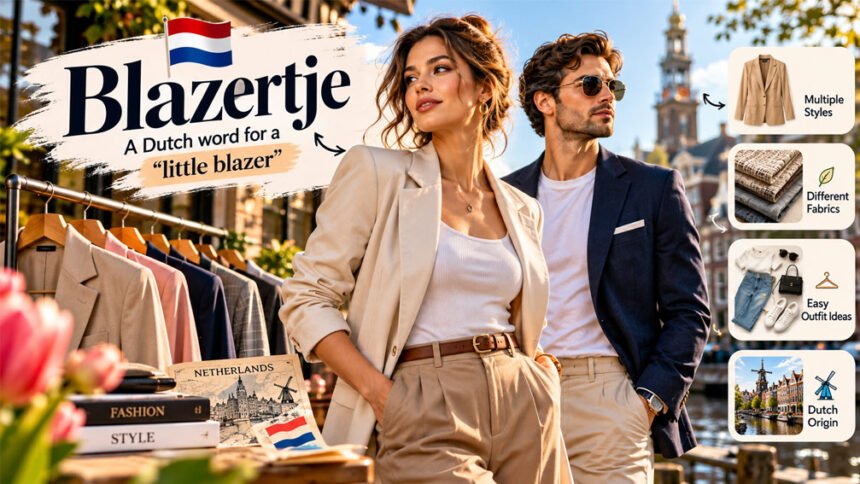
Blazertje is a Dutch word that means “little blazer” or “small blazer.” It comes from the word blazer and the Dutch word ending -tje, which can show smallness or add a friendly tone.
People search for Blazertje to understand its meaning, origin, and use in fashion. Some websites describe it as a new fashion trend, but there is no clear evidence that it is a separate type of clothing.
This guide explains what Blazertje means, how the word is formed, how it differs from a regular blazer, and what you should know about blazer styles, fabrics, and designs.
What Does Blazertje Mean?
Blazertje means “little blazer” or “small blazer” in Dutch. It is formed by adding a Dutch word ending to the word blazer.
The ending can suggest something small or give a word a more familiar and friendly tone. Its exact meaning depends on how it is used in a sentence.
In clothing listings, Blazertje may refer to a small blazer or a jacket described in an informal way. However, the word does not always mean that the jacket is physically small.
It also does not automatically mean that the jacket is cropped, lightweight, fitted, or made for a particular occasion. These details depend on the actual design.
Some online articles present Blazertje as a special fashion style. However, the available research does not establish it as a separate clothing category with its own design rules.
The simplest way to understand the term is to think of it as a Dutch form of the word blazer, rather than the name of a new type of jacket.
The Dutch Origin of Blazertje
Blazertje comes from the word blazer and the Dutch diminutive ending -tje. Dutch uses diminutives to express small size, affection, familiarity, or an informal tone.
A diminutive is a changed form of a word that can make its meaning smaller or more personal. The same idea appears in many languages, although the word endings differ.
Here are some simple Dutch examples:
- Huis → huisje: House → little house.
- Boek → boekje: Book → little book.
- Kop → kopje: Cup → little cup.
- Blazer → blazertje: Blazer → little blazer.
Dutch has several diminutive endings, including -je, -tje, -etje, and -pje. The correct form depends on the original word’s spelling and sound.
These endings are common in everyday Dutch. They are not limited to fashion or clothing.
For this reason, Blazertje does not necessarily describe a new fashion idea. It follows a normal pattern in the Dutch language.
The word may appear in clothing descriptions, shopping listings, or fashion articles. Its meaning should be understood from the surrounding text and the item being described.
Is Blazertje a Real Fashion Trend?
Blazertje is a Dutch word, but that does not mean it is a separate fashion trend.
Some websites use the term as the main subject of fashion guides. These articles may discuss blazer styles, colours, fabrics, outfit ideas, and ways to care for the jacket.
However, the available research does not show that Blazertje is an officially recognized fashion category or a new movement in the clothing industry.
The word has also been reported in Dutch clothing listings and resale marketplaces, including Vinted. In these cases, it may simply be used as a Dutch description for a blazer.
This difference is important. A word can be used in clothing shops without naming a special style or trend.
Some online articles may make the term sound like a new fashion idea because unusual words can attract search interest. However, repeated use across websites does not prove that a new fashion trend exists.
If you see a product described as a Blazertje, check its photos, measurements, fabric, and design. These details will tell you more about the jacket than the name alone.
Blazertje vs. a Traditional Blazer
The main difference between Blazertje and blazer is the language, not the clothing itself.
A blazer is a tailored jacket that can be worn with different types of trousers, skirts, jeans, or dresses. Blazertje is the Dutch diminutive form of the word blazer.
The word Blazertje may suggest a smaller jacket or a more informal tone. However, it does not define a fixed shape, length, or fit.
A Blazertje could be cropped, fitted, oversized, lightweight, or traditionally tailored. The actual design depends on the garment.
It is also useful to understand the difference between a blazer and a suit jacket.
A blazer is usually designed to be worn separately with other clothing. For example, you can pair it with jeans, chinos, or trousers in a different colour.
A suit jacket is designed to match the trousers made from the same suit fabric. It is usually worn as part of a coordinated suit.
Both types of jackets can have similar features, such as lapels, buttons, pockets, and a tailored shape. Their intended use and construction may differ.
When shopping, do not assume that a Blazertje must have a special design. Check the product description and measurements to understand what you are buying.
Common Blazer Styles and Designs
Blazers come in many styles, lengths, and fits. The word Blazertje does not refer to one specific design, so it helps to understand the main options.
Single-Breasted Blazer
A single-breasted blazer usually has one row of buttons down the front. It is a common design because it can work with many types of clothing.
You can wear it with jeans and a T-shirt for a casual outfit or with tailored trousers and a shirt for work. Navy, black, grey, and beige are useful colours for everyday wear.
Double-Breasted Blazer
A double-breasted blazer has overlapping front panels and two rows of buttons. This design often gives the jacket a more structured appearance.
It can be worn with formal trousers, dresses, skirts, or simple tops. The fit and fabric affect whether it looks formal or relaxed.
Cropped Blazer
A cropped blazer is shorter than a standard blazer. It usually ends around the waist or above the hips.
This style can work well with high-waisted jeans, trousers, and skirts. It is also an option for people who prefer a shorter jacket.
However, a cropped blazer is not automatically a Blazertje. The Dutch word does not require the jacket to have a short length.
Oversized Blazer
An oversized blazer has a looser shape and more room than a fitted design. It is often worn with jeans, simple T-shirts, trousers, or dresses.
The extra room can make layering easier. However, an oversized jacket should still allow comfortable movement and look balanced with the rest of the outfit.
Some oversized designs have wider shoulders and longer sleeves. These features may be part of the intended style rather than signs of a poor fit.
Fitted Blazer
A fitted blazer follows the body’s shape more closely. It may have a shaped waist and a closer fit through the chest and back.
This style can create a neat look for work, meetings, and formal occasions. It can also be worn casually with jeans or other everyday clothing.
The jacket should not feel too tight. You should be able to move your arms and sit comfortably without pulling the fabric.
Lightweight Blazer
A lightweight blazer uses thinner fabric or a less structured design. Cotton, linen, and some blended fabrics are common choices for lighter jackets.
These blazers can be useful in warmer weather or when you want a jacket that is easy to layer. Some have full linings, while others have partial or no lining.
A lightweight blazer is not a special type of Blazertje. It is simply one of the many blazer options available.
Common Blazer Fabrics
The fabric affects how a blazer feels, looks, and performs in different weather conditions.
| Fabric | Main qualities |
|---|---|
| Cotton | Comfortable and suitable for everyday wear. |
| Linen | Light and breathable, but wrinkles easily. |
| Wool | Provides warmth and works well for tailored jackets. |
| Polyester blends | Can be durable and may resist wrinkles, depending on the blend. |
| Viscose blends | Often feel soft and can provide a smooth drape. |
| Tweed | Has a textured look and is often used for heavier jackets. |
The best fabric depends on the climate, the occasion, and how often you plan to wear the jacket. Always check the fabric label because different blends can have different care needs.
How to Style a Blazertje for Different Occasions
A blazer can work with many outfits. The right combination depends on the occasion, weather, and your personal style.
Casual Everyday Outfits
For a casual look, wear a blazer with jeans, a plain T-shirt, and sneakers. This combination is simple and comfortable for shopping, meeting friends, or going out.
A relaxed or oversized blazer can work well with this style. Choose colours that match your jeans and shoes.
Smart-Casual Outfits
For a smart-casual look, combine a blazer with dark jeans or chinos, a shirt, and loafers or clean sneakers.
This style works for casual meetings, dinners, and some social events. It looks neat without being as formal as a full suit.
Blazertje Outfit Ideas for Women
A blazer can be worn with jeans, tailored trousers, skirts, or dresses. A cropped blazer can work well with high-waisted trousers, while a longer design can be paired with a simple dress.
Shoes also change the look. Sneakers create a relaxed outfit, while ankle boots, flats, or heels can make it look more formal.
Blazertje Outfit Ideas for Men
Men can wear a blazer with jeans, chinos, a polo shirt, or a button-down shirt.
For a casual outfit, choose jeans and clean sneakers. For work or a dinner, try chinos, a shirt, and loafers.
The colours should work well together. A navy, grey, or black blazer is often easy to match with other clothes.
Work and Formal Occasions
For work, a blazer can be paired with tailored trousers, a shirt, a blouse, or a skirt. A simple design in a neutral colour is often suitable for professional settings.
For formal events, choose a blazer with a neat fit and suitable fabric. Check the dress code before deciding what to wear, as some events require a complete suit.
How to Choose the Right Blazertje
When buying a Blazertje, focus on fit, fabric, colour, and comfort. The name alone does not tell you whether the jacket will suit your needs.
Check the shoulders first. The shoulder seams should sit in the right place unless the jacket is designed to be oversized. Poor shoulder fit can be difficult or costly to fix.
The jacket should also have enough room across the chest and back. You should be able to move your arms, sit down, and button it without the fabric pulling tightly.
Sleeves should be a comfortable length and should not cover too much of your hands. The jacket’s length should also work with the trousers, skirts, or dresses you plan to wear.
Think about fabric before buying. Cotton and linen can be useful in warmer weather, while wool and heavier fabrics are often better for cooler days.
Colour also matters. Navy, black, grey, and beige can match many outfits. Bright colours and bold patterns can be good choices if you want a more noticeable look.
Check the stitching, buttons, lining, and pockets. These details can help you judge the jacket’s construction and whether it suits your needs.
If you shop online, read the measurements and check the return policy. Do not rely only on the size label, as sizes can differ between brands.
How to Care for a Blazer
Proper care can help a blazer keep its shape and last longer.
Hang it on a strong, shaped hanger that supports the shoulders. Avoid leaving it folded or squeezed into a crowded wardrobe for long periods.
After wearing it, allow the jacket to air out when appropriate. If it has light wrinkles, a steamer may help, but check whether the fabric can handle steam.
Always read the care label before washing or cleaning the jacket. Some cotton or synthetic-blend blazers may be washable, while many wool or structured jackets need professional dry cleaning.
Do not put a blazer in a washing machine or dryer unless the care instructions allow it. Heat and unsuitable washing methods can damage the fabric, lining, or internal structure.
Before storing it for a long time, make sure the jacket is clean and dry. Keep it in a place where it will not become crushed or exposed to moisture.
Why Is Blazertje Appearing in Online Searches?
Blazertje appears in online fashion articles and clothing descriptions because it is an unusual word for many English-speaking readers.
Some websites explain it as a fashion style and discuss its meaning, history, outfits, and care. However, the available research does not confirm that Blazertje is a new or widely recognized fashion movement.
The word also appears in reports about Dutch clothing listings and resale marketplaces. In these cases, it can simply be a Dutch way to refer to a blazer.
When several websites use the same term, this does not automatically prove that it is a major fashion trend. The articles may be explaining the same word rather than reporting a new development in the clothing industry.
If you see Blazertje in a product listing, look at the photographs, measurements, material, and fit. These details are more useful than assuming the word describes a special design.
Benefits and Limitations of Blazers
Blazers can be useful because they work with different types of clothing and suit many occasions.
Benefits
- Versatile: A blazer can work with jeans, trousers, skirts, and dresses.
- Many styles: You can choose from fitted, cropped, oversized, single-breasted, and double-breasted designs.
- Suitable for different occasions: The right blazer can work for casual outings, work, and some formal events.
- Many fabric choices: Lightweight fabrics suit warmer weather, while wool and heavier fabrics can provide more warmth.
- Easy to match: Neutral colours can work with many items already in your wardrobe.
Limitations
- Care needs: Some blazers require dry cleaning or special care.
- Fit problems: A poorly fitted jacket may feel uncomfortable or look untidy.
- Alteration costs: Changing the shoulders or overall structure can be difficult and expensive.
- Weather limits: Heavy fabrics may feel too warm in hot weather.
- Different quality levels: Two blazers that look similar may have different fabrics and construction.
These points apply to blazers in general. They do not describe a separate product category called Blazertje.
Tips for Buying a Blazertje
Keep these simple tips in mind when choosing a blazer:
- Know when you will wear it. Choose a design that suits your work, daily activities, or social events.
- Check the fit. Pay special attention to the shoulders, chest, sleeves, and length.
- Choose a useful colour. Pick a shade that matches several items you already own.
- Check the fabric. Consider the weather, comfort, and cleaning needs.
- Look at the details. Check the buttons, stitching, lining, and pockets.
- Read online measurements. Do not depend only on the size label.
- Consider the total cost. Include possible cleaning and alteration costs.
- Do not rely on the name alone. Blazertje does not automatically mean cropped, fitted, or lightweight.
For a first blazer, a simple design in a versatile colour is often a practical choice. You can explore more unusual colours and cuts later if they suit your wardrobe.
Bottom Line
Blazertje is a Dutch word formed from blazer and the diminutive ending -tje. It can mean “little blazer” or “small blazer.”
Although some websites present it as a special fashion trend, the available research does not establish it as a separate or officially recognized clothing category.
The actual jacket may be cropped, fitted, oversized, lightweight, or traditionally tailored. Its design depends on the garment, not just the word used to describe it.
If you are buying a blazer, focus on fit, fabric, comfort, construction, and care instructions. These details will help you choose a jacket that suits your wardrobe and the occasions when you plan to wear it.
Frequently Asked Questions
What does Blazertje mean in English?
Blazertje is a Dutch word meaning “little blazer” or “small blazer.”
Is Blazertje a Dutch word?
Yes. It comes from blazer with the Dutch ending -tje.
Is Blazertje a specific fashion trend?
No clear evidence shows it is a separate fashion trend. It is mainly a Dutch word for a blazer.
Is a blazertje always cropped?
No. A blazertje can be short, long, fitted, or oversized.
Can I wear a blazertje with jeans?
Yes. You can wear it with jeans, a T-shirt, and sneakers for a simple casual look.
Is a blazertje suitable for work?
Yes. A neat blazer can work well with trousers, a shirt, a blouse, or a skirt.
How should a blazertje fit?
It should fit comfortably around the shoulders and chest. You should be able to move easily.
Which colour should I choose first?
Black, navy, grey, or beige are good choices because they are easy to match with other clothes.
More To Explore:
BrumeBlog Com: How It Works, What It Covers, and Is It Reliable?